There are times in my life when I wish that my pockets went a little deeper, or that my heart were a little bigger. A couple of Sundays ago, I had one of those experiences.
I am currently attending services at CA (Christian Assembly) in Eagle Rock, CA. I stand abreast of them theologically, appreciate the applicable, exegetical style of preaching and have found myself steadily building a community which I am able to help support and vice-versa. For all intents and purposes, I am already beginning to think of CA as "home."
But sometimes you want to punch your brother right in the face.
The evening service, called Fusion, is the service I usually attend; it is geared more or less toward the 18-35 demographic, though the worship and sermon for the day do not change. At any rate, I really enjoy it. So there I am, sitting next to Azina in the 3rd row from the back, minding my own business, listening to the message being given when POW!, in comes a guy, totally late, obviously drunk, disheveled, and maybe a little off his rocker. I imagined he was homeless, or close to it. He came into my row, politely garbled an "excuse me," stepped on my unshoed feet in passing and sat down next to Azina.
To show her comfort -- as I could tell she was obviously uncomfortable -- I put my arm around her.
We resume listening to Mark explain whatever it was he was explaining. (Honestly, I was thinking of that guy sitting next to my girl, wondering about the last time he had a meal, or a shower, or a meal and a shower in the same day.) Then, this guy -- he begins agreeing with Mark from where he is sitting with slurred words and joy! I don't mean that sort of joy mixed in with religiosity and a cool "I love Jesus, but I know when its time to say 'Amen'" sort of joy. I mean real, unbridled, rising-above-the-human-condition sort of joy. The sort of joy you only get to hear about.
Then, people begin looking back, staring. Gaping. Judging.
Men and women alike craned their necks to peer at this man, to silently mock him, to scream "Shut up!" with their eyes, to mingle in their hate of anything "other" with that of their faith in Jesus. A guy about my age at the end of my row came and sat down next to the joyful one, putting his arm around him and whispering for him to be quiet. An apology was given and the man became quiet, somber, ill-at-ease. But soon, very soon, really, he got back to agreeing with Mark, to making his presence known, to exclaiming that he understood. I felt a joy rise up in me for this man. I agreed too. Why was I the quiet one?
So another, older man looks back and retreats up the stairs into the foyer of the sanctuary. Remember, we are seated in the sanctuary, where everyone should feel safe. This is where criminals used to grab the horns of the altar and seek forgiveness. But not this time. An usher came and excused the inebriated man from the rest of the crowd, relegating him to the back of the building. At this point, Mark looked up from his teaching and saw the man escorted out of the sanctuary; he didn't say a word.
It was then that I felt a fury in my bones and I wished to God for violence.
I cannot tell you what the remainder of the service was about because I had stopped paying attention. I had started planning. When all was said and done I got up from my pew and told Azina I would catch up to her. I found the man as he came back in and grabbed him in an embrace.
"Hey brother," I said.
"Hey!," he said.
I found out his name is Daniel. He lives with his brother and has been actually staying sober. (He wasn't drunk after all -- just damaged from all the alcohol and hard times of his life.) We walked across the street to the cafe, I got him some food and we talked. He told me about his time in Viet Nam, his love for Jesus, his brother. I told him about when I was a kid, being homeless, motel life, Jesus, my brother. Even sitting down and talking, people continued to gawk. I couldn't believe it. We departed for the evening, but I know that I will see Daniel again; I hear he is a bit of a regular attender at CA.
Yet I do not understand the men and women of Modern Christianity. Didn't Jesus say that we should clothe the needy, give them food and drink, a place to rest, visit the prisoners, have pity on the widow? Didn't he say that if we did that to them, we were doing it to him? Aren't the poor in spirit blessed? Are these people reading a different Bible than me?
So, I can only do what I have been called to; I am very grateful that I am not responsible for any others' salvation, because -- by this point -- I would have braided myself a cord of leather. I understand that violence is not the answer, though sometimes it seems the easiest route.
The only thing I can say is to remember not to put a limit on your generosity. Who cares what the homeless man does with your dollar? It was never yours to begin with. If you don't have the time to teach the man to fish, why do you withhold the bit of extra that you do have? I understand that it could lead to building a welfare state, but everything you are entrusted with doesn't amount to much if you go hoarding away all of your talents.
Didn't the early Church believe that withholding charity from the poor was the same as thievery?
7.11.2007


7.10.2007
My God
Something I am working on. Maybe something like a psalm.
Give me Your Name in fire
in meteor steel, in windy whispers
Bruise my calloused, thick-skinned body
with the all-consuming wieght of Your touch;
Brush against my face with the tenderness
of Your fingertips
Cause me, O Faithful One, to remember
the glory of Your back as You walk past --
and I uncover my eyes to glimpse
Your Radiance;
Help me to recall my true name
The name You have called me by since
darkness, since time unending
Tattoo me with Your Love,
That I might not forget,
that Your Name will always remain
On these lips, in this heart, even in murky, milky
silence.
Give me Your Name in fire
in meteor steel, in windy whispers
Bruise my calloused, thick-skinned body
with the all-consuming wieght of Your touch;
Brush against my face with the tenderness
of Your fingertips
Cause me, O Faithful One, to remember
the glory of Your back as You walk past --
and I uncover my eyes to glimpse
Your Radiance;
Help me to recall my true name
The name You have called me by since
darkness, since time unending
Tattoo me with Your Love,
That I might not forget,
that Your Name will always remain
On these lips, in this heart, even in murky, milky
silence.
A More Commodious Space, Though Now I Have to Flush the Toilet
The new job is working out pretty well; I actually get a cubicle which I can "decorate" however I choose, as opposed to the "Desk in the Round" setting of the old job, which felt a little 3rd grade-ish. As a result, it is a little more commodious (spacious) though there are a couple of drawbacks. They are as follows:
1. We are sort of situated in the hood.
2. The bathroom isn't nearly as nice -- I have to actually push the handle to flush the toilet.
3. No more free soda. :(
4. The "kitchen" also doubles as the supply closet.
We should be moving to a new office on the 8th floor within the next 2 months and renovating a lot, which I am looking forward to. As I said, this is a pretty cool place; thus far, I really like the people and am getting along quite well. When the dust settles, I hope to move up fairly effortlessly.
1. We are sort of situated in the hood.
2. The bathroom isn't nearly as nice -- I have to actually push the handle to flush the toilet.
3. No more free soda. :(
4. The "kitchen" also doubles as the supply closet.
We should be moving to a new office on the 8th floor within the next 2 months and renovating a lot, which I am looking forward to. As I said, this is a pretty cool place; thus far, I really like the people and am getting along quite well. When the dust settles, I hope to move up fairly effortlessly.
7.09.2007
The Start of Something New
Today is a funny day; I dragged myself out of bed at 7 am to turn on the shower and breathe in the steam from the hot water. I'm not usually up this early in the morning, at least not on a regular basis. (Granted, sometimes I stay up until about this time, but then I can just go to bed and wake up sometime post-meridian.)
At any rate, I'm up with a bit of free time before I leave in 15 minutes. I'm beginning a new job and am currently in that ambivalent state somewhere between excitement and dread. I'm very happy that I can work on something new, utilizing the gifts I have been given on a more regular basis, but I sort of fear that I won't live up to expectation -- having more experience on the desk than most of the editors currently employed by this new company -- Prime Newswire. As it turns out, I have been out of work for over a month now, though I knew I had locked this job in after my first (and only) interview that lasted more than 3 hours -- which took place over a month ago at this point as well.
I heard that this company was a little unorganized, but I had not realized how true that actually was. I would get calls asking me if I had spoken with so and so and, when I answered in the negative, I was told someone would call me back. Through this job, God is already quickening my patience and giving me this sense that I am in for an exciting, though bumpy ride.
Anyway, I begin the new job, essentially doing the exact same thing I was doing at PRN, though the possibility for growth within the company is drastically improved, it is a little farther away and I will now be on the day shift. Since I don't mind hard work, driving and hanging out with my friends at night, I think this is a good move.
At any rate, I'm up with a bit of free time before I leave in 15 minutes. I'm beginning a new job and am currently in that ambivalent state somewhere between excitement and dread. I'm very happy that I can work on something new, utilizing the gifts I have been given on a more regular basis, but I sort of fear that I won't live up to expectation -- having more experience on the desk than most of the editors currently employed by this new company -- Prime Newswire. As it turns out, I have been out of work for over a month now, though I knew I had locked this job in after my first (and only) interview that lasted more than 3 hours -- which took place over a month ago at this point as well.
I heard that this company was a little unorganized, but I had not realized how true that actually was. I would get calls asking me if I had spoken with so and so and, when I answered in the negative, I was told someone would call me back. Through this job, God is already quickening my patience and giving me this sense that I am in for an exciting, though bumpy ride.
Anyway, I begin the new job, essentially doing the exact same thing I was doing at PRN, though the possibility for growth within the company is drastically improved, it is a little farther away and I will now be on the day shift. Since I don't mind hard work, driving and hanging out with my friends at night, I think this is a good move.
6.19.2007
The advent of death in a dying world
It has been nearly a month since my last blog and I am somewhat ashamed about it. However, the past week has been difficult as my grandmother on my father's side passed away and I flew out to New Jersey with Pualani to be with the family. I had not seen many of them since I was nine.
My grandmother lived a good, long life and passed away at the ripe old age of 90. She would have been 91 on the 30th. She was charming, outspoken, a great cook and a lover of the WWE. (seriously.) I got to help out with the obituary and such, as my knowledge of language is a bit far-spread compared with most of the family -- and because I have a basic understanding of how the media works. At any rate, I was out in the pines of New Netherlands feeling both a sense of mourning and joy.
It was nice to see family and all that, but I never realized how different I am from the rest of them. I thought this might be the case, but I had no idea of the actual truth of the matter! My family would readily say yes, they are a bunch of motorcycle-riding pineys (hill billies, mostly.) As a kid, I worshipped my family and their chosen profession of truck-driving. How different I turned out, though! (Thank God for California!)
One last thing: this has been weighing heavily on me. My grandmother was a Lutheran and professed Christian for a long time. Then, at the end of her life, she decided to convert to Mormonism. I am filled with a lead-burden at her choice and have experienced a sorrow beyond words. I hate it when people say, "she is in a better place." It is unfortunate, but I do not think that is true. Her allegiance lied elsewhere. I won't speculate one way or another if I will see her in heaven, but I have never experienced God's sovereignty in such a heart-wrenching way.
My grandmother lived a good, long life and passed away at the ripe old age of 90. She would have been 91 on the 30th. She was charming, outspoken, a great cook and a lover of the WWE. (seriously.) I got to help out with the obituary and such, as my knowledge of language is a bit far-spread compared with most of the family -- and because I have a basic understanding of how the media works. At any rate, I was out in the pines of New Netherlands feeling both a sense of mourning and joy.
It was nice to see family and all that, but I never realized how different I am from the rest of them. I thought this might be the case, but I had no idea of the actual truth of the matter! My family would readily say yes, they are a bunch of motorcycle-riding pineys (hill billies, mostly.) As a kid, I worshipped my family and their chosen profession of truck-driving. How different I turned out, though! (Thank God for California!)
One last thing: this has been weighing heavily on me. My grandmother was a Lutheran and professed Christian for a long time. Then, at the end of her life, she decided to convert to Mormonism. I am filled with a lead-burden at her choice and have experienced a sorrow beyond words. I hate it when people say, "she is in a better place." It is unfortunate, but I do not think that is true. Her allegiance lied elsewhere. I won't speculate one way or another if I will see her in heaven, but I have never experienced God's sovereignty in such a heart-wrenching way.
6.03.2007
My Mother
This is being penned partly in response to a comment I received from Azina regarding "Running the Gauntlet," a fictional piece I wrote and posted here about a week ago. This story is true.
I was born to Roberta Maile Ann Friel Myers, wife of Keith Robert Myers (hence my name) and daughter of Roberta Hegemann Friel in Rancocas Hospital, Willingboro, NJ at 9:39 am on Wednesday, July 14, 1982. I was blue in the face and unbreathing. They tented me. I was asthmatic.
On my mom's side, I come from a prominent hapa-haole family of O`ahu, Hawai`i, considered ali`i (royalty) and had some inter-marriage with the last reigning family of the Monarchy. But based on my upbringing, you wouldn't know it. My mom, Lord bless her, has struggled with gender roles her entire life. As a child, she wanted to be a boy; she did little boy things, played little boy games and dressed in little boy clothes. When my tutu would bring home dolls and such, she would cry and beg for Tonka trucks. As a child, they had two homes on the islands -- a home on O`ahu on the back side of Diamond-Head (where my tutu still lives) and a summer home on the island of Molokai (where my great aunt also resides to this day.) Growing up, she was mentally and physically abused by my grandfather, though it is never talked about. At 16, my mom's family moved to Thailand where she went to the International School of Bangkok, eventually securing her degree. Two years later, my tutu and the children returned home, without my grandfather -- a divorce soon followed. I have heard it said that, when my family returned to the islands from Thailand, all the children (4 of them) went a little screwy in the head; it is generally blamed on my grandfather's capacity for violence. As a result, I have an anakala (uncle) that I have yet to meet, as he is a ward of the State of Hawai`i -- mentally handicapped beyond repair. He, also, is not mentioned by name. His is Earnest.
At any rate, my mother moved to the Mainland to be with her grandmother, who had a tendency to spoil my mom with whatever she wanted. As a result, she met my father, had kids and continued to live with Grandma Buddy in NJ. As a very, very young child, I can faintly remember my mom vacuuming, but always at odd hours (speed.) and never do I remember her doing laundry, cooking, or cleaning. My grandmother took care of most of that. My dad was a truck driver, so we saw him once every few days. Their marriage naturally fell apart. During the course of my family's separation and eventual divorce, we were pitted child against parent, used as a bargaining chip and forced to listen to backbiting amongst parents. As an aside, one of the worst thing a parent can do to a child is to tell them the faults of the other parent, whether present or absent, as it causes questions to rise in the child's mind as to the validity of their life, their family unit and the meaning of `ohana and Aloha. Anyway, we moved to California and lived in motels until I was 13. To read about that trip, the post is called "When I was small..." and was written in April.
Throughout this whole time, my mother began relying on alcohol, marijuana and other drugs to escape the harshness of reality. She was taken advantage of repeatedly and barely clung to the life she had chosen for herself. On more than one occasion she tried to run out on us (literally) , were it not for the fact that her beer was at home, we shed a lot of tears and clung to her legs so she couldn't leave. I can recall hiding under the windowpane, curtains drawn, while Social Services knocked and knocked on the door. We were going to be taken away, and we knew it. I paid the rent when my mom's welfare check came in, handed over the rest and she would drink it away. We went hungry from about the 3rd of the month to the 15th, and then again from about the 18th to the end of the month. I think that is why I don't eat a lot now.
At 13, I had had enough. I was the good kid though I was in a gang. I hadn't been to school in over a year and missed it tremendously. I told my mom I hated what she was doing and I didn't want to be a dad to my own siblings. (My older sister had already moved out by this time and occasionally brought food and punishment by. For more on that, read "Pualani and the Infinite Memory.") She told me if I didn't like it I could get out. I responded:
"You're a selfish bitch and I hope you burn in hell." And then I left.
I went eight years without seeing or speaking to my biological mom. In the course of that time, I came to know Christ as King, forgive her for her own stupidity, I was adopted into a family of love and caring parents and I longed to take back those brutal and hurtful words. But they could not be taken back. They were said and, ashamed as I am to admit it, they were meant. I knew the power of them and I spoke them into existence. I wept openly over it.
Then, when I finally saw my mom in college, she didn't recognize me. I had to tell her who I was, beg forgiveness and hope for the best.
Our relationship is still not great, but it is a lot better than it has ever been. We occasionally talk, but I never have words to speak; I honestly don't know her, nor she me. She is sort of from a past life, one that I never want to relive, but one I would never change.
I was born to Roberta Maile Ann Friel Myers, wife of Keith Robert Myers (hence my name) and daughter of Roberta Hegemann Friel in Rancocas Hospital, Willingboro, NJ at 9:39 am on Wednesday, July 14, 1982. I was blue in the face and unbreathing. They tented me. I was asthmatic.
On my mom's side, I come from a prominent hapa-haole family of O`ahu, Hawai`i, considered ali`i (royalty) and had some inter-marriage with the last reigning family of the Monarchy. But based on my upbringing, you wouldn't know it. My mom, Lord bless her, has struggled with gender roles her entire life. As a child, she wanted to be a boy; she did little boy things, played little boy games and dressed in little boy clothes. When my tutu would bring home dolls and such, she would cry and beg for Tonka trucks. As a child, they had two homes on the islands -- a home on O`ahu on the back side of Diamond-Head (where my tutu still lives) and a summer home on the island of Molokai (where my great aunt also resides to this day.) Growing up, she was mentally and physically abused by my grandfather, though it is never talked about. At 16, my mom's family moved to Thailand where she went to the International School of Bangkok, eventually securing her degree. Two years later, my tutu and the children returned home, without my grandfather -- a divorce soon followed. I have heard it said that, when my family returned to the islands from Thailand, all the children (4 of them) went a little screwy in the head; it is generally blamed on my grandfather's capacity for violence. As a result, I have an anakala (uncle) that I have yet to meet, as he is a ward of the State of Hawai`i -- mentally handicapped beyond repair. He, also, is not mentioned by name. His is Earnest.
At any rate, my mother moved to the Mainland to be with her grandmother, who had a tendency to spoil my mom with whatever she wanted. As a result, she met my father, had kids and continued to live with Grandma Buddy in NJ. As a very, very young child, I can faintly remember my mom vacuuming, but always at odd hours (speed.) and never do I remember her doing laundry, cooking, or cleaning. My grandmother took care of most of that. My dad was a truck driver, so we saw him once every few days. Their marriage naturally fell apart. During the course of my family's separation and eventual divorce, we were pitted child against parent, used as a bargaining chip and forced to listen to backbiting amongst parents. As an aside, one of the worst thing a parent can do to a child is to tell them the faults of the other parent, whether present or absent, as it causes questions to rise in the child's mind as to the validity of their life, their family unit and the meaning of `ohana and Aloha. Anyway, we moved to California and lived in motels until I was 13. To read about that trip, the post is called "When I was small..." and was written in April.
Throughout this whole time, my mother began relying on alcohol, marijuana and other drugs to escape the harshness of reality. She was taken advantage of repeatedly and barely clung to the life she had chosen for herself. On more than one occasion she tried to run out on us (literally) , were it not for the fact that her beer was at home, we shed a lot of tears and clung to her legs so she couldn't leave. I can recall hiding under the windowpane, curtains drawn, while Social Services knocked and knocked on the door. We were going to be taken away, and we knew it. I paid the rent when my mom's welfare check came in, handed over the rest and she would drink it away. We went hungry from about the 3rd of the month to the 15th, and then again from about the 18th to the end of the month. I think that is why I don't eat a lot now.
At 13, I had had enough. I was the good kid though I was in a gang. I hadn't been to school in over a year and missed it tremendously. I told my mom I hated what she was doing and I didn't want to be a dad to my own siblings. (My older sister had already moved out by this time and occasionally brought food and punishment by. For more on that, read "Pualani and the Infinite Memory.") She told me if I didn't like it I could get out. I responded:
"You're a selfish bitch and I hope you burn in hell." And then I left.
I went eight years without seeing or speaking to my biological mom. In the course of that time, I came to know Christ as King, forgive her for her own stupidity, I was adopted into a family of love and caring parents and I longed to take back those brutal and hurtful words. But they could not be taken back. They were said and, ashamed as I am to admit it, they were meant. I knew the power of them and I spoke them into existence. I wept openly over it.
Then, when I finally saw my mom in college, she didn't recognize me. I had to tell her who I was, beg forgiveness and hope for the best.
Our relationship is still not great, but it is a lot better than it has ever been. We occasionally talk, but I never have words to speak; I honestly don't know her, nor she me. She is sort of from a past life, one that I never want to relive, but one I would never change.
5.25.2007
Running the Gauntlet
*Another story with graphic language. Please be forewarned.
“Tables are made for glasses, not little asses!,” my mother coldly reminded me. I was sitting on the table in the front room, looking at the calloused underside of my left foot. We weren’t allowed to wear shoes in the house. It was kapu. Bad luck. Forbidden. There was dog shit all over my foot, from Robby, our mutt. We found him when I was four. He was big. Lean. Stupid. Running in the street. We kept him inside the house, so he wouldn’t get away. He was half blind in one eye.
I, being the unfortunate one in this case, smelled it after I went ankle deep. I sat on the table, gauging the damage. The shit ran deep. It was caked on, warm and black-brown. Robby had worms. I knew I was in trouble now. There was no way around it. Should I choose to get off the table, I would smear feces all over the floor and take an ass whooping from my mother. If I didn’t, I failed to follow her orders and, as a result, I would take an ass whooping from my mother. She wasn’t one for listening to explanations. I got up, trying to balance on my right foot.
“Eh boy, why you standing on one foot? I no can play games today!” My mother wasn’t what we would call gifted in the maternal department. To put it frankly, she was a bitch.
“O well,” my tutu would say, “you only get one mama, an she’s it. Besides, she’s preppin’ you all for the real world.” My mom walked over to me then, arm raised to strike. Then the smell hit her and she pulled her head back, arm coming down in the same instant, five knobby knuckles rubbing across my brow. “You stepped in dog shit? What are you, lolo? You stupid little keiki!” As I turned to deflect some of the force, my foot came down against the carpet, hard. The blows continued as she ranted, banshee-like, “What? You think you can put stinky feet on the carpet? You big man? You don’t like rules, big man! Ok, here, take this! Clean this shit up. Else, I kill you!” She meant it, too, I know. After the whooping stopped, I hobbled to the bathtub, letting only the toes of my left foot touch the ground.
“Not the tub, lolo! Go outside and use the hose!” Needless to say, I turned to get out the backdoor, tears streaming but unafraid. The screen door slammed behind me as I walked toward the hose, moving correctly now, through the dirt and turning on the spigot. My brother met me at the faucet, his hands cupped to catch the water.
“Got your ass beat again, huh?”
“Yeah. Stupid dog.”
“Stupid you, man. Why you step so deep? Walk light, you know.” My little brother, Kiki, thought he was a zen monk at 3. He was six at this point. We were only ten months apart. Practically twins, except we were so different. He had freckles and red, curly hair. I got the olive skin, white blond hair. Blue eyes were split between us. As we got older, Kiki’s eyes turned green.
“Whatevers. I gotta clean that up. Stinky fuckin’ dog.”
“Momma gonna hear you!”
“So, I take whatever she got.”
“Bachi, you take it. Like you take it now, tear-face?
“Say it again.”
“Huh?”
“Say it again. I dare you. Say it again, we fight.”
“Tearface. T-E-E-R-F—“
I hit him, then, left fist flying and we turned over and over, swinging and biting, turning red-faced as the muddied water dirtied our already-stained clothing. We ended up on our asses a few minutes later, in the grass, wiping our hands and mouths.
“Told you,” I said.
“What you said?”
“I told you, I’d hit you if you said it again.”
“Tearface. See, I said it again. I’m a tiger.”
“You’re a nothing.”
“You gonna turn off the faucet?”
“Yeah. But we cant go back in the house now. We dirty and wet.”
“I‘ll watch out.”
“Yeah, ok. I go. You watch. I change, we switch. Throw your clothes out the window, OK?”
“OK.”
“We gonna bury ‘em in the garden.”
“How ‘bout we throw ‘em over the fence?”
“No luck, man. Mrs. Stevenson throw ‘em back.”
“Yeah. You right. Dat crazy old hag.”
“OK, OK, watch for me. You see her, you whistle long time. Not too loud, though. Else, Mama know.
“Maybe first, we check da window. You know, we climb in, its easy.”
“K.” I ran over to the window, past the honeysuckle bushes and pushed my stained hands against the glass. I pushed in and up. It budged. I pushed harder until my face got hot, but the pane no longer moved. “Eh,” I yelled back to my brother. “I think its locked.” He motioned me back over with his hands, sitting with his back against the stucco wall of the house. I ran to him, ducked over and beginning to worry if our plan would really work.
“OK,” Kiki said, “are your feet dry?”
“Yeah yeah. Here I go.”
“Malama pono!” I peeled open the screen door, slowly. It creaked and Robby came over, sitting in the doorway. Coming in and shutting the door without turning around, I climbed over the beast and sprinted on my toes, crouched over, to the large wooden couch from the islands. Kneeling here, I panted and looked back to see Robby, face printed on the screen door. I waved him in.
When he got to me, he said, “I thought we do this one and one.”
“No. Same time. I go. You come. You whistle if you see, I wave if I see.”
“OK man.” I peeked around the corner and Mama was doing dishes, whistling softly at the sink. I ran to the entrance to the hallway and turned in time to see Kiki getting up as Mama turned around, half suspicious. Frantically, I waved him back and he ducked out, just in time. I came down low and looked at Mama, making her turn around with my mind until the coast was clear. Again, I waved Kiki in.
Once together, we made for the first door on the left, our bedroom. “I feel like a ninja,” Kiki said as I had my hand upon the doorknob. I quieted him and we moved in, undressed, and put on new clothes. In one movement, we opened the window and threw out our dirties, slamming the pane as I turned around. Mama was in the doorway.
“Why is your hair all wet? Where you been, both of you?!”
“Tables are made for glasses, not little asses!,” my mother coldly reminded me. I was sitting on the table in the front room, looking at the calloused underside of my left foot. We weren’t allowed to wear shoes in the house. It was kapu. Bad luck. Forbidden. There was dog shit all over my foot, from Robby, our mutt. We found him when I was four. He was big. Lean. Stupid. Running in the street. We kept him inside the house, so he wouldn’t get away. He was half blind in one eye.
I, being the unfortunate one in this case, smelled it after I went ankle deep. I sat on the table, gauging the damage. The shit ran deep. It was caked on, warm and black-brown. Robby had worms. I knew I was in trouble now. There was no way around it. Should I choose to get off the table, I would smear feces all over the floor and take an ass whooping from my mother. If I didn’t, I failed to follow her orders and, as a result, I would take an ass whooping from my mother. She wasn’t one for listening to explanations. I got up, trying to balance on my right foot.
“Eh boy, why you standing on one foot? I no can play games today!” My mother wasn’t what we would call gifted in the maternal department. To put it frankly, she was a bitch.
“O well,” my tutu would say, “you only get one mama, an she’s it. Besides, she’s preppin’ you all for the real world.” My mom walked over to me then, arm raised to strike. Then the smell hit her and she pulled her head back, arm coming down in the same instant, five knobby knuckles rubbing across my brow. “You stepped in dog shit? What are you, lolo? You stupid little keiki!” As I turned to deflect some of the force, my foot came down against the carpet, hard. The blows continued as she ranted, banshee-like, “What? You think you can put stinky feet on the carpet? You big man? You don’t like rules, big man! Ok, here, take this! Clean this shit up. Else, I kill you!” She meant it, too, I know. After the whooping stopped, I hobbled to the bathtub, letting only the toes of my left foot touch the ground.
“Not the tub, lolo! Go outside and use the hose!” Needless to say, I turned to get out the backdoor, tears streaming but unafraid. The screen door slammed behind me as I walked toward the hose, moving correctly now, through the dirt and turning on the spigot. My brother met me at the faucet, his hands cupped to catch the water.
“Got your ass beat again, huh?”
“Yeah. Stupid dog.”
“Stupid you, man. Why you step so deep? Walk light, you know.” My little brother, Kiki, thought he was a zen monk at 3. He was six at this point. We were only ten months apart. Practically twins, except we were so different. He had freckles and red, curly hair. I got the olive skin, white blond hair. Blue eyes were split between us. As we got older, Kiki’s eyes turned green.
“Whatevers. I gotta clean that up. Stinky fuckin’ dog.”
“Momma gonna hear you!”
“So, I take whatever she got.”
“Bachi, you take it. Like you take it now, tear-face?
“Say it again.”
“Huh?”
“Say it again. I dare you. Say it again, we fight.”
“Tearface. T-E-E-R-F—“
I hit him, then, left fist flying and we turned over and over, swinging and biting, turning red-faced as the muddied water dirtied our already-stained clothing. We ended up on our asses a few minutes later, in the grass, wiping our hands and mouths.
“Told you,” I said.
“What you said?”
“I told you, I’d hit you if you said it again.”
“Tearface. See, I said it again. I’m a tiger.”
“You’re a nothing.”
“You gonna turn off the faucet?”
“Yeah. But we cant go back in the house now. We dirty and wet.”
“I‘ll watch out.”
“Yeah, ok. I go. You watch. I change, we switch. Throw your clothes out the window, OK?”
“OK.”
“We gonna bury ‘em in the garden.”
“How ‘bout we throw ‘em over the fence?”
“No luck, man. Mrs. Stevenson throw ‘em back.”
“Yeah. You right. Dat crazy old hag.”
“OK, OK, watch for me. You see her, you whistle long time. Not too loud, though. Else, Mama know.
“Maybe first, we check da window. You know, we climb in, its easy.”
“K.” I ran over to the window, past the honeysuckle bushes and pushed my stained hands against the glass. I pushed in and up. It budged. I pushed harder until my face got hot, but the pane no longer moved. “Eh,” I yelled back to my brother. “I think its locked.” He motioned me back over with his hands, sitting with his back against the stucco wall of the house. I ran to him, ducked over and beginning to worry if our plan would really work.
“OK,” Kiki said, “are your feet dry?”
“Yeah yeah. Here I go.”
“Malama pono!” I peeled open the screen door, slowly. It creaked and Robby came over, sitting in the doorway. Coming in and shutting the door without turning around, I climbed over the beast and sprinted on my toes, crouched over, to the large wooden couch from the islands. Kneeling here, I panted and looked back to see Robby, face printed on the screen door. I waved him in.
When he got to me, he said, “I thought we do this one and one.”
“No. Same time. I go. You come. You whistle if you see, I wave if I see.”
“OK man.” I peeked around the corner and Mama was doing dishes, whistling softly at the sink. I ran to the entrance to the hallway and turned in time to see Kiki getting up as Mama turned around, half suspicious. Frantically, I waved him back and he ducked out, just in time. I came down low and looked at Mama, making her turn around with my mind until the coast was clear. Again, I waved Kiki in.
Once together, we made for the first door on the left, our bedroom. “I feel like a ninja,” Kiki said as I had my hand upon the doorknob. I quieted him and we moved in, undressed, and put on new clothes. In one movement, we opened the window and threw out our dirties, slamming the pane as I turned around. Mama was in the doorway.
“Why is your hair all wet? Where you been, both of you?!”
5.22.2007
The Quiet Life -- and Death -- of Harold Gaines
**Please note that this story contains strong language. Thanks ahead of time.
“Give me another, Barkeep. Straight up.”
“Yep.” The bartender poured another whisky into the shot glass and slid it across the old wooden counter. It was engraved with initials, symbols and the tales of misfortune. Scratched up and ragged, it fit the personality of the man who sat at its foot. The man caught the glass as it sloshed towards him and shot it to the back of his throat in one fluid motion, letting out a grunt as he swallowed and wiped his face with his forearm. He was piss drunk and knew it. He slapped down a five dollar bill and hoped that his head would empty as quickly as his wallet.
“Another.”
“Don’t you think you’ve had enough?”
“No. Not really. Pass another, would you? Same as before.” The neon sign above him shone blue on his tattered face and the salt and pepper five o’clock shadow was tinted in a depressing sort of manner to the bartender. Behind him numerous people shot billiards or threw darts. Music played silently in the background. The bartender looked despairingly at the man, shook his head solemnly, and poured another. Sliding it down the counter again, the man caught it and let it sit on the counter-top. His large white hands fingered the rim of the glass and he looked gloomily into its bottom. I’d just as soon wish it didn’t happen, he thought. But it did happen. He was a wash, and now everyone knew it.
His weather-worn brown leather jacket lay crumpled about the floor and his black tie was pulled out loose to give his throat room to breathe; the first button of his white dress shirt was undone -- his sleeves were rolled up. The drunk’s right elbow was on the table and he leaned upon his open palm. Sighing to himself, he grabbed the shot glass about the base with his thumb and forefinger, his other three fingers spread wide, and shot the hot fluid into his throat. It burned his insides.
He had been writing for some time now. Since he was 16, really, but wasn’t published until about 25. After his first novel, people called him a genius. They hailed him at book signings. Now, though, he was called a “has been” and elementary; redundant. No one taught him how to save the best for last.
“Hey, Buddy. Buddy.” The bartender called to him. “You alright. No dozing off here, chum. You can drink, shoot, throw, wail, complain, bitch. Hell, you can cry if you want. But you cant sleep. This isn’t a hostel. It’s a bar.”
“Yeah. Alright.” He slapped another five spot on the bar and looked up into the bartender’s cool blue eyes. In a scratchy voice, the old author asked, “I’m not a wash, am I?”
“I don’t know who or what you are, Mac. But you’re a paying customer, so I’ve no problem. No, you’re not a wash.” Fucking lush, the bartender thought. That’s what you are. A pity parade.
“Well, thanks, I suppose.” The drunk grabbed his coat and headed out into the night. The streetlights made his face look haggard. He was ready to cry. There was something about his demeanor that made one want to hit them with their car. Not out of spite, really, but out of pity. It was as if one would be doing him a favor. But he got to his car- an old beater- opened the passenger door, and climbed in. He reclined all the way back and lay there, helpless and hopeless. Looking through the dingy sunroof, he could see the stars. I used to be just like them, he thought. Just like them. I was a star once. But his mind would not let him focus on the times of greatness, though he found himself returning to the past few years when his writing really took a drastic step downward.
It wasn’t so much that his wife cheated and eventually left. He didn’t mind his monetary status. He could afford rent, keep a decent library and had a computer to type at. In college, he had to use a typewriter. He knew he was done with that after trying to type his dissertation about a thousand times. He didn’t mind his ugly car or ugly shoes. Life, though different, wasn’t all that bad. But his writing had lapsed. He found that he wrote about the same things and told the same stories. He felt like a dad who respun the same old yarns and whose children were the mass consumers of the world. One day, he knew, they would grow tired and stop buying his books. And they did. Suddenly, without warning, the critics turned on him. The publishing house was not ready to put another one of his stories on the shelves; for the past few years, neither was he. But he had to make a living.
He didn’t like to write anymore and he wasn’t real fond of living. He hadn’t been gifted with a great imagination, so he wrote about what he knew. That’s why people liked his stuff when he had first gotten published. He told it how it was, through his characters. He didn’t pull any punches, but wasn’t heavy handed. He was gritty: raw. In all reality, he told the stories he knew so intimately quite well. The problem was that he hadn’t learned anything for a while; his writing suffered. He was scared to take trips overseas and was tired of the interstates. Road trips are only fun for so long. His newest friend was Jack Daniels, and he didn’t say much. The publishing house had been hounding him about his final piece so he turned in something he wasn’t very proud of. The critics had a field day. One, quite witty, read “Old Writer at the End of his Road and Cant Turn Back.” Another wrote, “One Way Trip to Bankrupt.” Still another, “Can't Teach an Old Dog New Tricks, and Tired of Reading about the Old Ones.” But he knew it was coming for quite some time.
His literary career was coming to a very abrupt end. Perhaps one day his early works would be read in schools, he thought. He tried to console himself, but he was little good at it. By now, he was becoming more tired and more depressed. The warmth of the whiskey was wearing off and the glassiness of his eyes was returning to normal. He took the cool night air into his lungs and shivered. He pulled his leather jacket over himself and tried to think of other things. Life, bills, anything. But it was of no use. He took the yellow legal pad and pen out from his glove box and began scribbling frantically under the amber colored streetlights. He was unsure of what he was writing, but it didn’t matter anymore. With his reputation in shambles, he could write anything he wanted. And so he did.
He cursed the critics and the readers. He said the has-beens are now the classics, so fuck off. Perhaps he wrote for his own amusement. He was defending the words he put to paper and knew he was probably doing a poor job of it. He wrote until he couldn’t write anymore, flipping page after page in the half-light. It was astonishing how quickly the man wrote, though his drunkenness was now beginning to fade and he only felt the residual effects of his multiple whiskey shots. After a while, he tossed the pad into the backseat, put his pen behind his ear and lie back down. He gazed again up at the stars and released a sigh of relief.
I suppose, he thought, this ends life as I know it. No more critics or fans, no deadlines or signings. I am beginning anew.
“Give me another, Barkeep. Straight up.”
“Yep.” The bartender poured another whisky into the shot glass and slid it across the old wooden counter. It was engraved with initials, symbols and the tales of misfortune. Scratched up and ragged, it fit the personality of the man who sat at its foot. The man caught the glass as it sloshed towards him and shot it to the back of his throat in one fluid motion, letting out a grunt as he swallowed and wiped his face with his forearm. He was piss drunk and knew it. He slapped down a five dollar bill and hoped that his head would empty as quickly as his wallet.
“Another.”
“Don’t you think you’ve had enough?”
“No. Not really. Pass another, would you? Same as before.” The neon sign above him shone blue on his tattered face and the salt and pepper five o’clock shadow was tinted in a depressing sort of manner to the bartender. Behind him numerous people shot billiards or threw darts. Music played silently in the background. The bartender looked despairingly at the man, shook his head solemnly, and poured another. Sliding it down the counter again, the man caught it and let it sit on the counter-top. His large white hands fingered the rim of the glass and he looked gloomily into its bottom. I’d just as soon wish it didn’t happen, he thought. But it did happen. He was a wash, and now everyone knew it.
His weather-worn brown leather jacket lay crumpled about the floor and his black tie was pulled out loose to give his throat room to breathe; the first button of his white dress shirt was undone -- his sleeves were rolled up. The drunk’s right elbow was on the table and he leaned upon his open palm. Sighing to himself, he grabbed the shot glass about the base with his thumb and forefinger, his other three fingers spread wide, and shot the hot fluid into his throat. It burned his insides.
He had been writing for some time now. Since he was 16, really, but wasn’t published until about 25. After his first novel, people called him a genius. They hailed him at book signings. Now, though, he was called a “has been” and elementary; redundant. No one taught him how to save the best for last.
“Hey, Buddy. Buddy.” The bartender called to him. “You alright. No dozing off here, chum. You can drink, shoot, throw, wail, complain, bitch. Hell, you can cry if you want. But you cant sleep. This isn’t a hostel. It’s a bar.”
“Yeah. Alright.” He slapped another five spot on the bar and looked up into the bartender’s cool blue eyes. In a scratchy voice, the old author asked, “I’m not a wash, am I?”
“I don’t know who or what you are, Mac. But you’re a paying customer, so I’ve no problem. No, you’re not a wash.” Fucking lush, the bartender thought. That’s what you are. A pity parade.
“Well, thanks, I suppose.” The drunk grabbed his coat and headed out into the night. The streetlights made his face look haggard. He was ready to cry. There was something about his demeanor that made one want to hit them with their car. Not out of spite, really, but out of pity. It was as if one would be doing him a favor. But he got to his car- an old beater- opened the passenger door, and climbed in. He reclined all the way back and lay there, helpless and hopeless. Looking through the dingy sunroof, he could see the stars. I used to be just like them, he thought. Just like them. I was a star once. But his mind would not let him focus on the times of greatness, though he found himself returning to the past few years when his writing really took a drastic step downward.
It wasn’t so much that his wife cheated and eventually left. He didn’t mind his monetary status. He could afford rent, keep a decent library and had a computer to type at. In college, he had to use a typewriter. He knew he was done with that after trying to type his dissertation about a thousand times. He didn’t mind his ugly car or ugly shoes. Life, though different, wasn’t all that bad. But his writing had lapsed. He found that he wrote about the same things and told the same stories. He felt like a dad who respun the same old yarns and whose children were the mass consumers of the world. One day, he knew, they would grow tired and stop buying his books. And they did. Suddenly, without warning, the critics turned on him. The publishing house was not ready to put another one of his stories on the shelves; for the past few years, neither was he. But he had to make a living.
He didn’t like to write anymore and he wasn’t real fond of living. He hadn’t been gifted with a great imagination, so he wrote about what he knew. That’s why people liked his stuff when he had first gotten published. He told it how it was, through his characters. He didn’t pull any punches, but wasn’t heavy handed. He was gritty: raw. In all reality, he told the stories he knew so intimately quite well. The problem was that he hadn’t learned anything for a while; his writing suffered. He was scared to take trips overseas and was tired of the interstates. Road trips are only fun for so long. His newest friend was Jack Daniels, and he didn’t say much. The publishing house had been hounding him about his final piece so he turned in something he wasn’t very proud of. The critics had a field day. One, quite witty, read “Old Writer at the End of his Road and Cant Turn Back.” Another wrote, “One Way Trip to Bankrupt.” Still another, “Can't Teach an Old Dog New Tricks, and Tired of Reading about the Old Ones.” But he knew it was coming for quite some time.
His literary career was coming to a very abrupt end. Perhaps one day his early works would be read in schools, he thought. He tried to console himself, but he was little good at it. By now, he was becoming more tired and more depressed. The warmth of the whiskey was wearing off and the glassiness of his eyes was returning to normal. He took the cool night air into his lungs and shivered. He pulled his leather jacket over himself and tried to think of other things. Life, bills, anything. But it was of no use. He took the yellow legal pad and pen out from his glove box and began scribbling frantically under the amber colored streetlights. He was unsure of what he was writing, but it didn’t matter anymore. With his reputation in shambles, he could write anything he wanted. And so he did.
He cursed the critics and the readers. He said the has-beens are now the classics, so fuck off. Perhaps he wrote for his own amusement. He was defending the words he put to paper and knew he was probably doing a poor job of it. He wrote until he couldn’t write anymore, flipping page after page in the half-light. It was astonishing how quickly the man wrote, though his drunkenness was now beginning to fade and he only felt the residual effects of his multiple whiskey shots. After a while, he tossed the pad into the backseat, put his pen behind his ear and lie back down. He gazed again up at the stars and released a sigh of relief.
I suppose, he thought, this ends life as I know it. No more critics or fans, no deadlines or signings. I am beginning anew.
5.14.2007
Something Calling
I have this deep desire inside me, placed there when I was just a boy with battered knees and broken lungs; I long to be a dad, to raise kids, to have a family of my own.
I want my sons (and daughters) to grow passionately into holy men and women, caring for the poor, the widow, the fatherless. I want to spin a destiny for my children so their lives are a reflection, not of me, but of my Father. I want them to cast big shadows and have strong shoulders: to be men of the earth, to use their hands for glory and their words to build kingdoms.
I want my daughters to be raised knowing their worth without burdens placed on their physical appearance; for them to know they are a loved beyond measure daughter of the King, princesses in his castle, precious thoughts to God Himself. I want them to grow into women of faith, character, tender-hearted strength.
In Hawaiian tradition, the naming of a child holds the weight of their destiny; the meaning of their name casts the die over their life, so to speak. A child is meant to grow into their name, much the same way we grow into our Manhood. That being said, I have not picked out names for my children, though there are a couple that I hold more dear than others. It is my hope that my wife will be okay with her children having Hawaiian names -- even if it is only the middle name -- as I think the continuance of my culture important; I hope it remains important to my children.
I do not remember my dad playing catch with me as a boy -- not once, not ever. I was talking to a good friend of mine this weekend while we were building a fence and I told him that I was very excited about playing catch with Azina at the park. (Azina being the awesome girl in my life, with perfect words always at the ready.) He was oddly interested at my excitement and told me I was acting like I had never played catch with my dad before. It was like I, a 24 year old man, had reverted to my 6 year old days. It was then I realized I hadn't. It was sort of an odd moment: epiphanaic. A couple of times we went fishing, I think, and I ended up eating the corn we were using for bait. I can recall a camping trip, some wrestling on the living room floor, the hugs after work. Everything physical sort of ended abruptly due to my asthma as a child, though we would eventually get together again to tickle, wrestle and fight. But that ended at my folks separation when I was but a child; I was one of those men without any sense of proper masculinity until taken in by my hanai father. It was then that he honed the skills and sense of honor that was already a part of me.
So now, years later, this sense of paternal longing is beginning to call to me in a sort of ebb and flow. At times it will be almost too much to bear -- the way I want to raise someone to see God with clear eyes and an open heart. At other times, though, its just... normal. I know I want kids but the desire isn't gripping me like a vice. Today is one of those vice-gripping days.
I want my sons (and daughters) to grow passionately into holy men and women, caring for the poor, the widow, the fatherless. I want to spin a destiny for my children so their lives are a reflection, not of me, but of my Father. I want them to cast big shadows and have strong shoulders: to be men of the earth, to use their hands for glory and their words to build kingdoms.
I want my daughters to be raised knowing their worth without burdens placed on their physical appearance; for them to know they are a loved beyond measure daughter of the King, princesses in his castle, precious thoughts to God Himself. I want them to grow into women of faith, character, tender-hearted strength.
In Hawaiian tradition, the naming of a child holds the weight of their destiny; the meaning of their name casts the die over their life, so to speak. A child is meant to grow into their name, much the same way we grow into our Manhood. That being said, I have not picked out names for my children, though there are a couple that I hold more dear than others. It is my hope that my wife will be okay with her children having Hawaiian names -- even if it is only the middle name -- as I think the continuance of my culture important; I hope it remains important to my children.
I do not remember my dad playing catch with me as a boy -- not once, not ever. I was talking to a good friend of mine this weekend while we were building a fence and I told him that I was very excited about playing catch with Azina at the park. (Azina being the awesome girl in my life, with perfect words always at the ready.) He was oddly interested at my excitement and told me I was acting like I had never played catch with my dad before. It was like I, a 24 year old man, had reverted to my 6 year old days. It was then I realized I hadn't. It was sort of an odd moment: epiphanaic. A couple of times we went fishing, I think, and I ended up eating the corn we were using for bait. I can recall a camping trip, some wrestling on the living room floor, the hugs after work. Everything physical sort of ended abruptly due to my asthma as a child, though we would eventually get together again to tickle, wrestle and fight. But that ended at my folks separation when I was but a child; I was one of those men without any sense of proper masculinity until taken in by my hanai father. It was then that he honed the skills and sense of honor that was already a part of me.
So now, years later, this sense of paternal longing is beginning to call to me in a sort of ebb and flow. At times it will be almost too much to bear -- the way I want to raise someone to see God with clear eyes and an open heart. At other times, though, its just... normal. I know I want kids but the desire isn't gripping me like a vice. Today is one of those vice-gripping days.
5.08.2007
The Decay of "I love you"
I was talking to this amazing girl last night on the phone, as has become a bit of a habit, and we fell to discussing the effect that language has on the human heart. I found myself telling her that, when a woman tells me she loves me, I am happy and content for a moment. However, the words eventually grow thin in meaning and decay inside my bosom so that the weight of the words is diminished, as am I with them. In their repetition do we find stale meaning.
But lo, when that same woman tells me that I am strong, courageous, fierce, compassionate, even tempered, brave, tender, righteous, etc., I find my heart grow in size so that my hands are not big enough to wrap themselves around this thing inside me and I fall and float, ecstatic. These words translate more fully as love to me than those old words of consumption. Further, they are not used nearly as often so that, when they are, I am leaded with their meaning, boltered in the downpour of its effect on my masculinity. For, though only masculinity can bestow masculinity, the feminine hand and mind was made to help conjure it when it is most needed, not out of thin air, but out of the wild hearts of the men in her life.
Even still, it could be said that women may come to loathe "I love you" as much as I when its bright filigree has faded and it sits in decay in our hearts, empty ashes of words flying from our mouths when fire is due. To them, I hope things like, "you are worthy to be loved," "you do not go unnoticed," and "I count you as a blessing in my life" weigh as heavily and shine as brightly in their hearts as being told I am fierce shines in mine.
But lo, when that same woman tells me that I am strong, courageous, fierce, compassionate, even tempered, brave, tender, righteous, etc., I find my heart grow in size so that my hands are not big enough to wrap themselves around this thing inside me and I fall and float, ecstatic. These words translate more fully as love to me than those old words of consumption. Further, they are not used nearly as often so that, when they are, I am leaded with their meaning, boltered in the downpour of its effect on my masculinity. For, though only masculinity can bestow masculinity, the feminine hand and mind was made to help conjure it when it is most needed, not out of thin air, but out of the wild hearts of the men in her life.
Even still, it could be said that women may come to loathe "I love you" as much as I when its bright filigree has faded and it sits in decay in our hearts, empty ashes of words flying from our mouths when fire is due. To them, I hope things like, "you are worthy to be loved," "you do not go unnoticed," and "I count you as a blessing in my life" weigh as heavily and shine as brightly in their hearts as being told I am fierce shines in mine.
5.03.2007
Matt and Ryan -- My Best Friends and Brothers in Righteousness.
 This is Matt. Well, this is Matt's back as he walks away on this incredible bridge in Northern California after Ryan's wedding. (More on Ryan later.)
Anyway, Matt is one of the coolest and most annoying men I have ever had the priviledge of knowing. We met in college during my sophormore year -- his freshman. He was loud, obnoxious and wildly hilarious. At first, we would fight, argue, disagree and just plain not like each other. In all honestly, I would start wrestling wars with the intent to do him a mischief. Oh, and I always won. :) Back to the point, we began talking and I realized that Matt was not just loud, but had a heart for holiness that astounded me. When Matt speaks of God I naturally want to listen. His heart, not just for Jesus, but for the nations, causes men to stand and take notice. He loves the Angels -- I mean seriously loves the team.
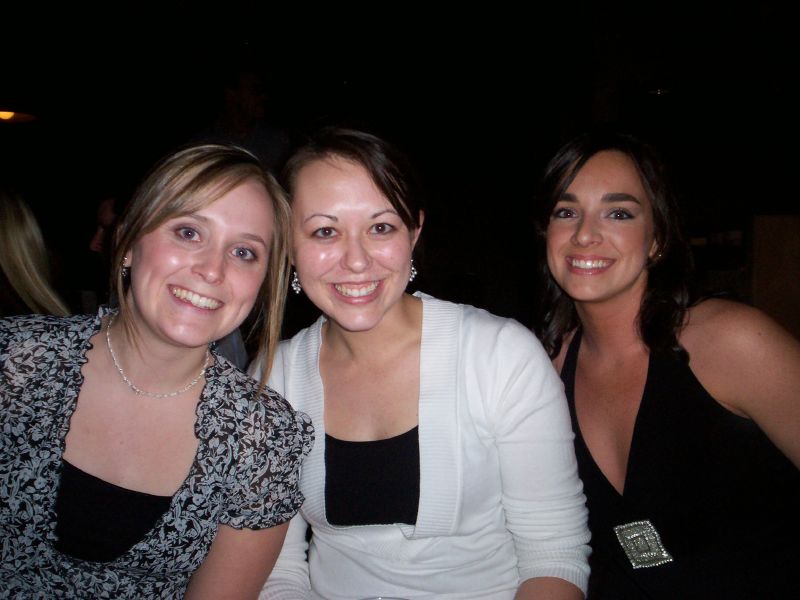 The thing is, Matt is really not good with women. He opens his mouth and enters his foot on a regular basis. However, he now has this great girlfriend, Niki. (She's the one on the left-most portion of this photo.) We were both pretty astounded when he and Niki hit it off (also at Ryan's wedding) and he eventually managed to get her to be his girlfriend. Now though, he's back to having the mouth-in-foot disease. He tries hard though.
So, after Matt graduated from CalBaptist we drove his S10 out to Alabama, where he began his seminary career. We got out to Houston (to Ryan's house and the Houston Astros) in 20 hours, got some sleep then caught a movie and a ballgame. Seriously, that was one of the best times in my life and I'm glad I got to share the time with him.
Now, on to Ryan. This is him with his stellar wife, Beth. I also met Ryan my sophormore year when I was in the dor ms. He had transferred from Texas and was a few years older. He lived across the hall from me and I couldn't stand my roommate at the time. (Sorry if you're reading this.) I'm pretty sure he thought I was weird at first, but that quickly dissolved into a great friendship. We would go surfing on occasion, but more than that we talked about music and baseball. If there are 2 things Matt and Ryan are passionate outside of Jesus, its baseball and music. Ryan cant play any instruments, but he definitely knows where the volume control is. Also, he invited the entire Houston Astros to his wedding. Seriously. :)
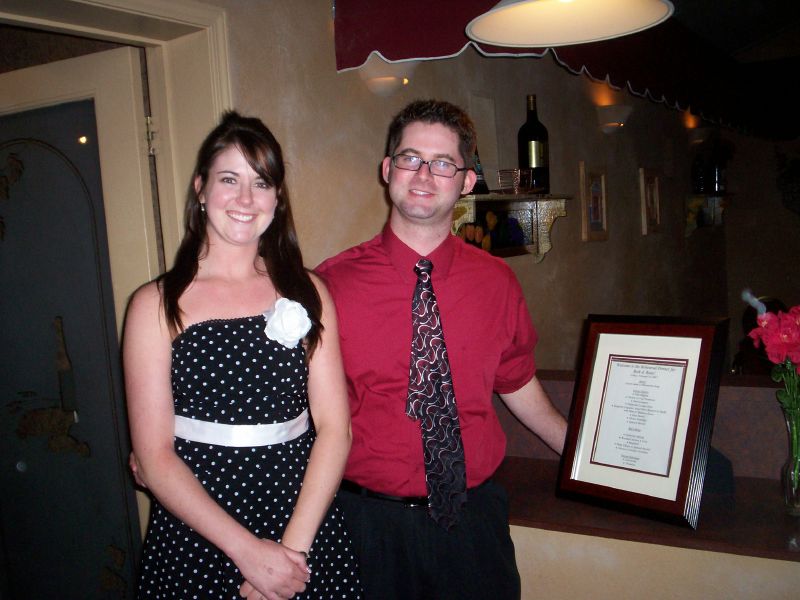 ms. He had transferred from Texas and was a few years older. He lived across the hall from me and I couldn't stand my roommate at the time. (Sorry if you're reading this.) I'm pretty sure he thought I was weird at first, but that quickly dissolved into a great friendship. We would go surfing on occasion, but more than that we talked about music and baseball. If there are 2 things Matt and Ryan are passionate outside of Jesus, its baseball and music. Ryan cant play any instruments, but he definitely knows where the volume control is. Also, he invited the entire Houston Astros to his wedding. Seriously. :)
Anyway, we ended up working out our theology together, by and large, and living together our junior and senior years. It quickly became evident that he would be a life-long friend. For a long time Ryan lacked direction -- then he met Bethy-poo while working at camp and his life changed. Everyone's life changed. They fell in love, got married and now they will be moving back down to SoCal (woo-hoo!!!) At any rate, it has been a blessing to see this brother grow and stretch in the Lord, not shirking the growing pains that come along with righteousness, but embracing them.
 All of these photos come, as I said, from Ryan and Beth's wedding, just a few short months ago. For the bachelor weekend, Ryan, Matt and I went to Lake Tahoe and did some riding. During that time we fell into being our old selves, loving on one another and encouraging Ryan to help him be a strong husband. This is us at the top of Squaw Hill.
5.02.2007
Whose Work Is It?: A Response
A few posts ago I mentioned a poem I wrote in response to Talaam Acey's "Go_'s Work," in which he posits the idea that modern poets -- more specifically performance poets, i.e. Slam Poets -- are closer to God's idea of ministers than the modern clergy. As previously stated, please check the poem out for yourself. It can be found on his spoken word album called "Pieces of Change."
At any rate, this is my response to that orginal work. I was going to read it a few weeks ago at the Oasis Cafe Open Mic Night, but they couldn't squeeze me in. Any and all comments/criticism welcome.
I heard today that poets do God’s work
and my itty-bitty poems are the words of creation –
As though my inventions were inspired from the inside of the Creator
and the lines I spew were wired from above –
Those rhymes that come out metaphysical and askew
line up the universe and eclipse the wars of today in a fog.
But let me ask: If the poets of today are prophets
and the words of our mouths come out like nonsense,
then what does that say about God?
Again: If the poets of today are prophets
and the words of our mouths come out like nonsense,
then what does that say about God?
Shouldn’t we be the ones to care for the widow?
We, who proclaim war or peace in the streets,
shouldn’t we be the bringers of hope to this generation,
so that we regenerate the wretched and wrench them out of their degradation?
We, who sleep in poet’s dens and bleed our lives through the poet’s pen –
our voices should be raspy with the effects of affecting humanity –
our feet should be sore with uncountable miles.
We should give hope in tribulation and trial –
our child should be fat with wisdom and lean in ignorance.
But where is the humility of longing for renewed innocence?
If we are doing God’s work,
If we are doing God’s work,
then we should spit for change and not for silver.
And our lines should warm hearts in the dead of winter.
And we should see past hypocrisy to the true believers and
We should rise as one against Caesar.
I said, We should rise as one against Caesar.
But if there are false prophets then there must be false poets,
drawing schismatic lines in the sand
while we hold their overdramatic lines in the palms of our hands and
We should be spitting glory for the widow and the fatherless
Our words should spring to life and cause mental riots till our dying breath.
If we’re on the stage for the sake of personal fame,
and we write these poems for the good of the game,
or the thrill of the chase
And we spit it out to further our name –
if that is me I will take the blame from your hearts
and the shame from your eyes, and by God I will try to change.
Because, If we are doing God’s work,
If we are doing God’s work,
then this goes far beyond profession, I’m professin'
our failed attempts to make clear lack the abstract
lack the eternal shadow behind our minds,
while false poets mine our mayhem with neophyte illusions
and find new ways to spread that age old confusion –
Meanwhile, we posit antique questions and come to masterful conclusions.
We take for granted current destitutions and our thoughts wander
so that we poets are turned to pawns.
I said we poets have been turned into pawns,
fawning over dead metaphors when precise language will educate the masses,
when we should be spitting against classism or Darfur’s state of genocide –
Instead, we return to rhyme in order to hide, so I ask,
Are we poets doing God’s work, or do we merely work for wages?
Are we the smiters of foul kingdoms or another ragged mouthpiece of the ages?
Perhaps we should stand silent in stoic observation,
or shout from the rooftops with fiery consternation –
If we are doing God’s work
We shouldn’t subjugate the masses with a damned sense of attrition.
If we are doing God’s work
We should bend our backs with crosses and take up His holy mission.
If we are doing God’s work.
Are we doing God’s work?
I say we have FAILED to do God’s work.
At any rate, this is my response to that orginal work. I was going to read it a few weeks ago at the Oasis Cafe Open Mic Night, but they couldn't squeeze me in. Any and all comments/criticism welcome.
I heard today that poets do God’s work
and my itty-bitty poems are the words of creation –
As though my inventions were inspired from the inside of the Creator
and the lines I spew were wired from above –
Those rhymes that come out metaphysical and askew
line up the universe and eclipse the wars of today in a fog.
But let me ask: If the poets of today are prophets
and the words of our mouths come out like nonsense,
then what does that say about God?
Again: If the poets of today are prophets
and the words of our mouths come out like nonsense,
then what does that say about God?
Shouldn’t we be the ones to care for the widow?
We, who proclaim war or peace in the streets,
shouldn’t we be the bringers of hope to this generation,
so that we regenerate the wretched and wrench them out of their degradation?
We, who sleep in poet’s dens and bleed our lives through the poet’s pen –
our voices should be raspy with the effects of affecting humanity –
our feet should be sore with uncountable miles.
We should give hope in tribulation and trial –
our child should be fat with wisdom and lean in ignorance.
But where is the humility of longing for renewed innocence?
If we are doing God’s work,
If we are doing God’s work,
then we should spit for change and not for silver.
And our lines should warm hearts in the dead of winter.
And we should see past hypocrisy to the true believers and
We should rise as one against Caesar.
I said, We should rise as one against Caesar.
But if there are false prophets then there must be false poets,
drawing schismatic lines in the sand
while we hold their overdramatic lines in the palms of our hands and
We should be spitting glory for the widow and the fatherless
Our words should spring to life and cause mental riots till our dying breath.
If we’re on the stage for the sake of personal fame,
and we write these poems for the good of the game,
or the thrill of the chase
And we spit it out to further our name –
if that is me I will take the blame from your hearts
and the shame from your eyes, and by God I will try to change.
Because, If we are doing God’s work,
If we are doing God’s work,
then this goes far beyond profession, I’m professin'
our failed attempts to make clear lack the abstract
lack the eternal shadow behind our minds,
while false poets mine our mayhem with neophyte illusions
and find new ways to spread that age old confusion –
Meanwhile, we posit antique questions and come to masterful conclusions.
We take for granted current destitutions and our thoughts wander
so that we poets are turned to pawns.
I said we poets have been turned into pawns,
fawning over dead metaphors when precise language will educate the masses,
when we should be spitting against classism or Darfur’s state of genocide –
Instead, we return to rhyme in order to hide, so I ask,
Are we poets doing God’s work, or do we merely work for wages?
Are we the smiters of foul kingdoms or another ragged mouthpiece of the ages?
Perhaps we should stand silent in stoic observation,
or shout from the rooftops with fiery consternation –
If we are doing God’s work
We shouldn’t subjugate the masses with a damned sense of attrition.
If we are doing God’s work
We should bend our backs with crosses and take up His holy mission.
If we are doing God’s work.
Are we doing God’s work?
I say we have FAILED to do God’s work.
5.01.2007
Family
Family is incredibly important to me. The funny thing is, however, I have a "non-traditional" family.
.

 L to R:
As a young teen, I was separated from my mother and biological family, eventually being taken in by a very caring and loving mom and dad (whom I now consider as blood.) Very soon it was considered and decided that I would be raised as one of their own, as a hanai (adopted) son. This family, the one that I have no genetic ties with, taught me a lot about what it means to have a loving mother and a providing, present father. Were it not for them, I could only fear the worst for my life, as it was through these experiences that I eventually came to God as a broken and battered boy.
.
Chris, my dad, taught me about manhood and passed his masculinity on to me in a way that came with strength -- but without fear. In the process of all of this, I gained an additional sister, Amber, and brother, Charles. Although we did not always get along, I never felt as though I did not belong in the home. Honestly, it was great times.
.Below is a picture of my family on Amber's 26th birthday, just a few weeks ago. My mom isn't in the picture because she was working in China. (seriously.)
From L to R:
Charles, the youngest of us and chef at Staple's Center. The kid can make some mean food, loves punk rock and was the little brother I "taught" how to wrestle. :) He is quickly becoming the man we feared he would never realize -- someone of courage, strength and honor.
.
Dad -- the goat that he is -- did a lot for me though he would say otherwise. I could never consider myself a man until he told me I had passed the test. Until I received his blessing around the age of 20, I considered myself a boy. With a dad like mine, that only makes sense.
.
Me.
.
Amber, the queen of drama. She deserves better than she gets and I think she is starting to realize it. We are living together currently and rarely see one another. But she's great and I am learning how to tell her I love her without it being weird.
.
However, that's not the end of my family. Some of you know, but I recently went to a family reunion and had a great time. My blood family is just as important to me as my hanai family -- I have my genealogy on my body, proven in ink. They help to ground me, support me and understand my love for all things Polynesian better than anyone else I know. Here they are...
L to R:Pualani, my older sister and the woman who helped to raise me until I moved out of my mom's house. She is strong-willed, hard-headed and recently found God in a way that is both terrifying and awe-inspiring.
.
Uncle Steve -- this is the man mentioned in my post dedicated to Azina. Nothing else needs saying.
.
Kapono -- my youngest brother -- lives with my little sister in West Virginia. Shortly after I moved out of my mom's place, they got taken away. For a long time I blamed myself. Now he and I are great friends and I can already see the kind of man he will become; he has already stretched himself outside the realm of my father's shadow and he is only 17.
.
Uncle Stan, one of the most compassionate men I know, is taking care of my grandma in Hawai`i. The man gets no time for himself and is very, very selfless.
.
Pualeiala, my littlest sister is also the most momona (fat). She's great, has a temper and somehow has never aged. Growing up she had this very thin, unnatural hair that didn't want to grow -- ever. We teased her for it. Now though, she has this wonderful mane of hair that curls and spirals down her back. She and Kapono helped to raise one another, similar to how close Pualani and I are.
.
Me, hair pulled back for a hula performance.
.
Tutu (grandma) -- the matriarch of the family and teller of stories. I have some ink on my body dedicated to her as well. She also lives on O`ahu with my Uncle Stan.
.
Not in the picture is my hele hope (little brother) Keoke. We fight like cats and dogs, live on opposite sides of the spectrum and the continent, and take to one another like oil takes to water. But I wouldn't trade him in for any other. He helped keep me alive during the worst of it.
4.27.2007
Martyrs in Turkey
This post is being penned in a sea of sorrow. Somehow, the words to express my fear and shame for the actions of men who claim murder "in the name of religion" are far from me. For the first time since the Turkish Republic was founded in 1997, Christians have become martyrs. The chilling thing to note is that this will not be the last time we hear of these gruesome tales.
Please pray for everyone involved. We have been told "They will know us by our love." Please pray that is true and that we, as Christians, will not rush to take up whip and chain against a religion that is already confused and lost in a state of rebellion to the One True God.
Father, we look for mercy where there should not be any, knowing full well that Yours is a plan well beyond understanding. We do not look for clarity, but for peace. Further, we pray for the families of the killers, that they might not take joy in the death of others, but that You, in Your Divine Light, might make them vessels for Your Holy Kingdom. Affect them, God; quicken them.
God, if You so will it, we pray that Your judgement might come down with the weight of Your Mighty Right Hand upon the oppressors of Your People. Save us, God, from the distribution of the wicked. We pray for the Christians in the region, that You might put out Your Hand of Protection and hedge them in. Spare their lives, God, in Your goodness.
To find the original story, please go here: http://www.compassdirect.org/en/display.php?page=news&lang=en&length=long&idelement=4836
Please pray for everyone involved. We have been told "They will know us by our love." Please pray that is true and that we, as Christians, will not rush to take up whip and chain against a religion that is already confused and lost in a state of rebellion to the One True God.
Father, we look for mercy where there should not be any, knowing full well that Yours is a plan well beyond understanding. We do not look for clarity, but for peace. Further, we pray for the families of the killers, that they might not take joy in the death of others, but that You, in Your Divine Light, might make them vessels for Your Holy Kingdom. Affect them, God; quicken them.
God, if You so will it, we pray that Your judgement might come down with the weight of Your Mighty Right Hand upon the oppressors of Your People. Save us, God, from the distribution of the wicked. We pray for the Christians in the region, that You might put out Your Hand of Protection and hedge them in. Spare their lives, God, in Your goodness.
To find the original story, please go here: http://www.compassdirect.org/en/display.php?page=news&lang=en&length=long&idelement=4836
4.19.2007
The Letdown
It has been a few days since my last post, but this little nugget is about the event on Sunday.
We got to the cafe right around 7, I signed in, gave a copy of my writings to Amy -- the organizer -- and began the long wait until I could get on stage and spit a few verses. (That's ghetto for "say a few poems" for all of you ebonics-illiterate types.) Ryan and Beth were with me, so we all sat up front, waiting. My stomach was in my mouth, as there were about 200 people there. The venue grew so large we had to move to the theater adjacent to the cafe. After about 10 minutes I realized I was not anxious, but excited to drop some knowledge on so many people.
I had two peices in mind. One is on the beauty in grafitti, and the second is a response that defends the clergy. (The original work is called Go_'s Work, by Talaam Acey. I think you can pick it up on iTunes. He posits the idea that modern-poets are closer to God than those in His service. Take a listen.)
Anyway, we waited. And waited. And waited. The people there ranged dramatically in talent. After a while, we were told they didn't have room for me, though more people continued to go up and share. I felt letdown, as though the organizers were telling me my words were worthless.
Dont get me wrong. I know they are not. I've been given a great gift and I know it will be used for the Good of the Kingdom but in that very moment I wanted to bellow my poetry at the top of my lungs and pierce the ears of all who came with my quick wit, wordplay and deep knowledge of the Spirit and the written word.
But needless to say, we left the theatre when it was all over and I was quiet. Ryan and Beth asked if I was ok and I, in all honesty, let out the aggression that was pent up inside of me in a healthy, righteous way. I wanted to cry. I nearly did and I didnt care about it one way or another. On the car ride home, Ryan and Beth listened to my graffiti piece and gave comments.
I am glad they always have my back. Their encouragement meant, and means, a lot.
We got to the cafe right around 7, I signed in, gave a copy of my writings to Amy -- the organizer -- and began the long wait until I could get on stage and spit a few verses. (That's ghetto for "say a few poems" for all of you ebonics-illiterate types.) Ryan and Beth were with me, so we all sat up front, waiting. My stomach was in my mouth, as there were about 200 people there. The venue grew so large we had to move to the theater adjacent to the cafe. After about 10 minutes I realized I was not anxious, but excited to drop some knowledge on so many people.
I had two peices in mind. One is on the beauty in grafitti, and the second is a response that defends the clergy. (The original work is called Go_'s Work, by Talaam Acey. I think you can pick it up on iTunes. He posits the idea that modern-poets are closer to God than those in His service. Take a listen.)
Anyway, we waited. And waited. And waited. The people there ranged dramatically in talent. After a while, we were told they didn't have room for me, though more people continued to go up and share. I felt letdown, as though the organizers were telling me my words were worthless.
Dont get me wrong. I know they are not. I've been given a great gift and I know it will be used for the Good of the Kingdom but in that very moment I wanted to bellow my poetry at the top of my lungs and pierce the ears of all who came with my quick wit, wordplay and deep knowledge of the Spirit and the written word.
But needless to say, we left the theatre when it was all over and I was quiet. Ryan and Beth asked if I was ok and I, in all honesty, let out the aggression that was pent up inside of me in a healthy, righteous way. I wanted to cry. I nearly did and I didnt care about it one way or another. On the car ride home, Ryan and Beth listened to my graffiti piece and gave comments.
I am glad they always have my back. Their encouragement meant, and means, a lot.
4.12.2007
This Coming Sunday
I have a busy weekend ahead of me with Ryan and Beth, Matt and Niki coming down. I am doing a lot of work for hula as well, so I don't plan on having much in the way of free time. However! There is an open mic night at the cafe my church owns (it is adjacent to the building) and I think I am going to go, drop a few verses and check out the talent. If anyone is in the LA area, feel free to go. I will be doing 2 pieces, I think: one on graffitti and its influence on pop-culture, and another in response to a poem I heard that said poets are closer to God than the modern clergy. There is no cover or whatever. Just good people edifying others in words, song, etc. Here is a copy of the flier:

The cafe is part of Oasis Christian Center, located one block west of Highland on La Brea. Any questions? Hit me up. This shindig starts at 7p on Sunday.

The cafe is part of Oasis Christian Center, located one block west of Highland on La Brea. Any questions? Hit me up. This shindig starts at 7p on Sunday.
4.11.2007
When I Was Small...
This post is for Aziner, who asked me to expand on something noted in a comment.
I love and loathe the smell of diesel gasoline. When I was small, 9 actually, we were living in a rundown, dilapidated home in Camden, NJ. Honestly, I do not remember the sun ever shining, but found a continual gray layer of soot, or something hanging about. Maybe it is just in my mind, but even the day we waged war with our "super-soaker 35s," I cannot recall the sunlight. We were a large family, 6 of us including my mother, and we shared the home with another family, they being the primary owners.
The things I remember from that house are like a multitude of shadows against the nape of my neck: rats in the kitchen, what seemed like thousands of black, plastic trash bags full of dirty, mildew-ridden clothes, a pot-bellied stove to keep us warm at night as we four children huddled onto the pull-out couch and slept abreast of one another, a very leaky roof and the creak of an old floor beneath my little feet. My father lived an hour away in a beach house with his girlfriend at the time; when we saw him on the weekends, it was like sanctuary.
Imagaine our surprise when my mother told us we were moving to California. The first time she said it, we were astonished and overcome with joy. We got pulled out of school, packed our bags and.... nothing happened. We stayed at home. We waited and watched and fell silent in letdown. It happened this way three times. Each time we went back to school, I fought to gain the respect I once had, before the California Dream had taken my petty life and wrung from it the hope of a boy.
Then, in the Spring of 1991, my mother said it the fourth time. "We're moving to California." My older sister laughed. I smirked. We giggled and thought to ourselves, "yeah right." The next day, we came home to my mother waving Greyhound tickets in her hand. They went from Camden, NJ to Anaheim, CA with 15 stops in between. The trek was going to take 3 1/2 days and we were leaving late that night. For the remainder of the day, we packed up our meager belongings, throwing things away and giving up toys we had spent the entirety of our young lives accumulating. I gave away all of my baseball cards, with the exception of some of my favorites, tucked between the pages of a book I read quite often: Hatchet by Gary Paulsen.
That night, we stood bundled up and shivering in the darkness. The man we lived with, whose name I cannot even now recall, pulled us up to the bus-stop and drove away in silence. There were no long good-byes. Only hope. And fear. And this crazy idea in the head of my not-so-sober mother. We never told my dad we were leaving.
The next three days were filled with bumps in the road, very little sleep and vacant eyes looking out of dirty windows. I can recall the smell of diesel gasoline at every single stop, the motor running and headlights on. The horribly cramped bathrooms. Changing my little brother, who was only 14 months at the time, on the seats of the bus. The silver, metal TVs nailed to the chairs in the lobbies. We pretending to watch them, when, in reality we could not afford it. Noticing how the telephone company changed now and again at the pay phones along the road. Gazing at the box that said "Maile Freil. Anaheim, CA" We didn't even have an address. I can recount to you the men my mom rode along-side of, their crisp and gnarled faces, their slurred words in the darkness, the fear of my sisters next to me.
Even then, when I was so young, I was given this.... responsibility. My kid brother Keoki is only 11 months younger than myself and I can remember encouraging him to move forward, to board the bus, to eat his food, to drink water. My mother relied on me and Pua to keep everyone in order, to prepare the make-shift meals, to be on time. I was this Lord Protector. It was more than a side-kick role with my sister. We were partners. Parents.
When we rolled into CA, my uncle was there to meet us. We were dirty, scared and tired. He kissed us, all of us, right on the head and got us into his home, a hot shower and clean clothes. It was one of the nicest things anyone has ever done for me.
Since then, I rode a Greyhound once -- back to NJ, without a parent, when I was 11. I had my younger siblings and we visited my father. Again, I would not trade those memories for another, as it was an education in what not to do with the children I may someday be blessed with.
So every time my nose picks up that diesel smell in the fog, I think of a Greyhound bus, a cold morning somewhere in the Midwest, a lost family running toward a vague and inconspicuous future. It is haunting, but not unwelcome.
I love and loathe the smell of diesel gasoline. When I was small, 9 actually, we were living in a rundown, dilapidated home in Camden, NJ. Honestly, I do not remember the sun ever shining, but found a continual gray layer of soot, or something hanging about. Maybe it is just in my mind, but even the day we waged war with our "super-soaker 35s," I cannot recall the sunlight. We were a large family, 6 of us including my mother, and we shared the home with another family, they being the primary owners.
The things I remember from that house are like a multitude of shadows against the nape of my neck: rats in the kitchen, what seemed like thousands of black, plastic trash bags full of dirty, mildew-ridden clothes, a pot-bellied stove to keep us warm at night as we four children huddled onto the pull-out couch and slept abreast of one another, a very leaky roof and the creak of an old floor beneath my little feet. My father lived an hour away in a beach house with his girlfriend at the time; when we saw him on the weekends, it was like sanctuary.
Imagaine our surprise when my mother told us we were moving to California. The first time she said it, we were astonished and overcome with joy. We got pulled out of school, packed our bags and.... nothing happened. We stayed at home. We waited and watched and fell silent in letdown. It happened this way three times. Each time we went back to school, I fought to gain the respect I once had, before the California Dream had taken my petty life and wrung from it the hope of a boy.
Then, in the Spring of 1991, my mother said it the fourth time. "We're moving to California." My older sister laughed. I smirked. We giggled and thought to ourselves, "yeah right." The next day, we came home to my mother waving Greyhound tickets in her hand. They went from Camden, NJ to Anaheim, CA with 15 stops in between. The trek was going to take 3 1/2 days and we were leaving late that night. For the remainder of the day, we packed up our meager belongings, throwing things away and giving up toys we had spent the entirety of our young lives accumulating. I gave away all of my baseball cards, with the exception of some of my favorites, tucked between the pages of a book I read quite often: Hatchet by Gary Paulsen.
That night, we stood bundled up and shivering in the darkness. The man we lived with, whose name I cannot even now recall, pulled us up to the bus-stop and drove away in silence. There were no long good-byes. Only hope. And fear. And this crazy idea in the head of my not-so-sober mother. We never told my dad we were leaving.
The next three days were filled with bumps in the road, very little sleep and vacant eyes looking out of dirty windows. I can recall the smell of diesel gasoline at every single stop, the motor running and headlights on. The horribly cramped bathrooms. Changing my little brother, who was only 14 months at the time, on the seats of the bus. The silver, metal TVs nailed to the chairs in the lobbies. We pretending to watch them, when, in reality we could not afford it. Noticing how the telephone company changed now and again at the pay phones along the road. Gazing at the box that said "Maile Freil. Anaheim, CA" We didn't even have an address. I can recount to you the men my mom rode along-side of, their crisp and gnarled faces, their slurred words in the darkness, the fear of my sisters next to me.
Even then, when I was so young, I was given this.... responsibility. My kid brother Keoki is only 11 months younger than myself and I can remember encouraging him to move forward, to board the bus, to eat his food, to drink water. My mother relied on me and Pua to keep everyone in order, to prepare the make-shift meals, to be on time. I was this Lord Protector. It was more than a side-kick role with my sister. We were partners. Parents.
When we rolled into CA, my uncle was there to meet us. We were dirty, scared and tired. He kissed us, all of us, right on the head and got us into his home, a hot shower and clean clothes. It was one of the nicest things anyone has ever done for me.
Since then, I rode a Greyhound once -- back to NJ, without a parent, when I was 11. I had my younger siblings and we visited my father. Again, I would not trade those memories for another, as it was an education in what not to do with the children I may someday be blessed with.
So every time my nose picks up that diesel smell in the fog, I think of a Greyhound bus, a cold morning somewhere in the Midwest, a lost family running toward a vague and inconspicuous future. It is haunting, but not unwelcome.
4.10.2007
I Want Not Clarity, Father, but Trust in the Darkness
How often I have found myself on my knees, begging the Holy One for clarity while my hands felt the walls about me, my eyesight failing, my mind growing with anxiety and fear! How easy it is to be the boy who crawls through the dark, all knees and elbows, head bowed and tired with the personal fright of the things to come -- those terrible things unseen and daunting in the black abyss of the unknown.
But the voice calls to me. "Be strong and courageous."
We are not asked to look for clarity, but to trust in God's reliability. My buddy Jeff has a tendency to say, "God will not rip you off," and it is true. Why would the loving God of my Salvation let me wander about the darkness while those things lurk about without giving me the Hand of His Protection? He would not!
Brennan Manning, in Ruthless Trust, puts it this way:
"Craving clarity, we attempt to eliminate the risk of trusting God. Fear of the unknown path stretching ahead of us destroys childlike trust in the Father's active goodness and unrestricted love.
We often presume that trust will dispel the confusion, illuminate the darkness, vanquish the uncertainty, and redeem the times. But the crowd of witnesses in Hebrews 11 testifies that this is not the case. Our trust does not bring final clarity on this earth. It does not still the chaos or dull the pain or provide a crutch. When all else is unclear, the heart of trust says, as Jesus did on the cross, 'Into your hands I commit my spirit' (Luke 23:46).
If we could free ourselves from the temptation to make faith a mindless assent to a dusty pawnship of doctrinal beliefs, we would discover with alarm that the essence of biblical faith lies in trusting God." (Manning 6)
As opposed to that child, all knees and elbows, as I said, I would prefer to be the blind man who stands with regular breathing, hands at his sides, ready to walk into the fire if that is where his Lord leads him. Better still, to stand in my ferocity and welcome the darkness, knowing it cannot prevail. For though I cannot see in the dark, where my God lives there can be not but light.
The light will live in me, even if I stand in perfect darkness. Should the trees close in, I will not cry out. I will fear, but I will trust.
But the voice calls to me. "Be strong and courageous."
We are not asked to look for clarity, but to trust in God's reliability. My buddy Jeff has a tendency to say, "God will not rip you off," and it is true. Why would the loving God of my Salvation let me wander about the darkness while those things lurk about without giving me the Hand of His Protection? He would not!
Brennan Manning, in Ruthless Trust, puts it this way:
"Craving clarity, we attempt to eliminate the risk of trusting God. Fear of the unknown path stretching ahead of us destroys childlike trust in the Father's active goodness and unrestricted love.
We often presume that trust will dispel the confusion, illuminate the darkness, vanquish the uncertainty, and redeem the times. But the crowd of witnesses in Hebrews 11 testifies that this is not the case. Our trust does not bring final clarity on this earth. It does not still the chaos or dull the pain or provide a crutch. When all else is unclear, the heart of trust says, as Jesus did on the cross, 'Into your hands I commit my spirit' (Luke 23:46).
If we could free ourselves from the temptation to make faith a mindless assent to a dusty pawnship of doctrinal beliefs, we would discover with alarm that the essence of biblical faith lies in trusting God." (Manning 6)
As opposed to that child, all knees and elbows, as I said, I would prefer to be the blind man who stands with regular breathing, hands at his sides, ready to walk into the fire if that is where his Lord leads him. Better still, to stand in my ferocity and welcome the darkness, knowing it cannot prevail. For though I cannot see in the dark, where my God lives there can be not but light.
The light will live in me, even if I stand in perfect darkness. Should the trees close in, I will not cry out. I will fear, but I will trust.
4.06.2007
A Few Lines of Poetry for Your Minds
These have all been written recently. As always, all comments welcome, even if you hate them.
A Light Quilt and Rainbow Eyes
My words, like fingerprints, have been wiped clean
from your touch, scent, tears --
I cannot light a candle of thought to guide your steps
Nor does the rainbow in your eyes need pruning.
My gardener-gnarled hands have dirt beneath the nails --
The soil from your insides is rich, dark, smooth.
But it is only residue of a time without hands
Suddenly, suddenly, the tattered light of broken
smiles and broken promises
is stitched together in a quilt of perfect color
And its premier, crystalline rays radiate the warmth
of your frame, small one,
and I am glad to lay beneath the covers of your skin,
untouched and trembling --
until you find me with a gasp, and I am undone
at your beauty and the peace of your rainbow eyes.
The Soldier's Death
The night atmosphere,
the quiet ferocity in the air,
the Defender's call --
those perfumed mortar shells
and sonatas of bombings, of brine
and bile
the last hill worth dying on,
where blood seeps into the dirt
and the earth is dark with fury.
He yells to the wind with whithered
mourning
a last gasp,
some spittle
and the soldier's face goes blank.
The Adventurous Type
With hammer and steel,
I will come to you --
I will chip away at your wall,
your fortress of solitude
until you see my ocean eyes --
and smile; unafraid.
brave.
because you, my love,
are worth adventuring for --
and I bring to you my bread,
my bones
my blood.
That Man
I fear that I have thought of you -- laid out beneath a canopy of stars, or the thatched roof ceilings of poor, brown Spanish-speaking folk, more than you have of yourself. Did you know that, when the sunlight catches your eyes just right, I think I can see the future in them? Or that you have this Cassiopaeia constellation of freckles beneath your cheekbone, just above that scar you can't stop talking about -- you're so proud of it, though I can't remember why.
Lying on the rooftop and looking at the sky, I remember how the frost left your lips in gasps last Autumn and you told me life isn't worth living without hot tea and good friends in perfect silence and I said you're crazy. And maybe you are. But maybe, maybe, I am the mad one -- because your life seems much simpler with its compass and knapsack, its bedrolls and shaggy hair while this land-locked prison keeps me working for wages I fear I'll never see.
I remembered once you told me your favorite smell in the world was good, clean dirt:
and I laughed right in your face.
I regret that now and I'd take it back if I could -- I wish my heart were as pure as that brown earth beneath your fingernails, but alas, I am as human as anyone and you're quiet, jagged smile has already forgiven me.
A Light Quilt and Rainbow Eyes
My words, like fingerprints, have been wiped clean
from your touch, scent, tears --
I cannot light a candle of thought to guide your steps
Nor does the rainbow in your eyes need pruning.
My gardener-gnarled hands have dirt beneath the nails --
The soil from your insides is rich, dark, smooth.
But it is only residue of a time without hands
Suddenly, suddenly, the tattered light of broken
smiles and broken promises
is stitched together in a quilt of perfect color
And its premier, crystalline rays radiate the warmth
of your frame, small one,
and I am glad to lay beneath the covers of your skin,
untouched and trembling --
until you find me with a gasp, and I am undone
at your beauty and the peace of your rainbow eyes.
The Soldier's Death
The night atmosphere,
the quiet ferocity in the air,
the Defender's call --
those perfumed mortar shells
and sonatas of bombings, of brine
and bile
the last hill worth dying on,
where blood seeps into the dirt
and the earth is dark with fury.
He yells to the wind with whithered
mourning
a last gasp,
some spittle
and the soldier's face goes blank.
The Adventurous Type
With hammer and steel,
I will come to you --
I will chip away at your wall,
your fortress of solitude
until you see my ocean eyes --
and smile; unafraid.
brave.
because you, my love,
are worth adventuring for --
and I bring to you my bread,
my bones
my blood.
That Man
I fear that I have thought of you -- laid out beneath a canopy of stars, or the thatched roof ceilings of poor, brown Spanish-speaking folk, more than you have of yourself. Did you know that, when the sunlight catches your eyes just right, I think I can see the future in them? Or that you have this Cassiopaeia constellation of freckles beneath your cheekbone, just above that scar you can't stop talking about -- you're so proud of it, though I can't remember why.
Lying on the rooftop and looking at the sky, I remember how the frost left your lips in gasps last Autumn and you told me life isn't worth living without hot tea and good friends in perfect silence and I said you're crazy. And maybe you are. But maybe, maybe, I am the mad one -- because your life seems much simpler with its compass and knapsack, its bedrolls and shaggy hair while this land-locked prison keeps me working for wages I fear I'll never see.
I remembered once you told me your favorite smell in the world was good, clean dirt:
and I laughed right in your face.
I regret that now and I'd take it back if I could -- I wish my heart were as pure as that brown earth beneath your fingernails, but alas, I am as human as anyone and you're quiet, jagged smile has already forgiven me.
God's Friday
I know that today is typically known as Good Friday, but the etymology of the word points moreso toward God's Friday, hence the title of this blog. Also, I am aware that it is not usual of me to blog twice in one day, let alone four times in a week, but the need has arisen. Instead of painting a vision of the crucifixion with my own words, I will let the Word speak for itself, with prophecy given about 1000 years before the birth of Christ.
Psalm 22
To the Chief Musician. Set to "The Deer of the Dawn." A Psalm of David.
1 My God, My God, why have You forsaken Me?
Why are You so far from helping Me,
And from the words of My groaning?
2 O My God, I cry in the daytime, but You do not hear;
And in the night season, and am not silent.
3 But You are holy,
Enthroned in the praises of Israel.
4 Our fathers trusted in You;
They trusted, and You delivered them.
5 They cried to You, and were delivered;
They trusted in You, and were not ashamed.
6 But I am a worm, and no man;
A reproach of men, and despised by the people.
7 All those who see Me ridicule Me;
They shoot out the lip, they shake the head, saying,
8 "He trusted in the LORD, let Him rescue Him;
Let Him deliver Him, since He delights in Him!"
9 But You are He who took Me out of the womb;
You made Me trust while on My mother’s breasts.
10 I was cast upon You from birth.
From My mother’s womb
You have been My God.
11 Be not far from Me,
For trouble is near;
For there is none to help.
12 Many bulls have surrounded Me;
Strong bulls of Bashan have encircled Me.
13 They gape at Me with their mouths,
Like a raging and roaring lion.
14 I am poured out like water,
And all My bones are out of joint;
My heart is like wax;
It has melted within Me.
15 My strength is dried up like a potsherd,
And My tongue clings to My jaws;
You have brought Me to the dust of death.
16 For dogs have surrounded Me;
The congregation of the wicked has enclosed Me.
They pierced My hands and My feet;
17 I can count all My bones.
They look and stare at Me.
18 They divide My garments among them,
And for My clothing they cast lots.
19 But You, O LORD, do not be far from Me;
O My Strength, hasten to help Me!
20 Deliver Me from the sword,
My precious life from the power of the dog.
21 Save Me from the lion’s mouth
And from the horns of the wild oxen!
You have answered Me.
22 I will declare Your name to My brethren;
In the midst of the assembly I will praise You.
23 You who fear the LORD, praise Him!
All you descendants of Jacob, glorify Him,
And fear Him, all you offspring of Israel!
24 For He has not despised nor abhorred the affliction of the afflicted;
Nor has He hidden His face from Him;
But when He cried to Him, He heard.
25 My praise shall be of You in the great assembly;
I will pay My vows before those who fear Him.
26 The poor shall eat and be satisfied;
Those who seek Him will praise the LORD.
Let your heart live forever!
27 All the ends of the world
Shall remember and turn to the LORD,
And all the families of the nations
Shall worship before You.
28 For the kingdom is the LORD’s,
And He rules over the nations.
29 All the prosperous of the earth
Shall eat and worship;
All those who go down to the dust
Shall bow before Him,
Even he who cannot keep himself alive.
30 A posterity shall serve Him.
It will be recounted of the Lord to the next generation,
31 They will come and declare His righteousness to a people who will be born,
That He has done this.
The prophecy in these verses are clear enough. However, what some people do not know is that Jesus pointed those around him to this psalm. In Matthew 27:46 or Mark 15:34, while dying on the cross, Jesus lets out: "My God, My God, why have You forsaken Me?," the first line of the psalm. It is not far-fetched to realize that, due to the low literacy rate of the day, most scripture was memorized. Further, it was not known by "Psalm 22" as we Westerners know it today, but by the first line of text. Hence, Jesus was showing his captors that they helped to fulfill prophecy!!! Those around him would be reminded that, "The congregation of the wicked has enclosed Me./ They pierced My hands and My feet;/ I can count all My bones./ They look and stare at Me./ They divide My garments among them,/ And for My clothing they cast lots.
This is not to say that Jesus did not feel a wrenching of the heart at the separation of the Trinity... I can't even begin to imagine the pain of God being outside of His one-ness, but I do see how Jesus pointing those to scripture in His final hours makes perfect sense. He gloried, as we should, in bringing glory to our Great Father.
I don't know how to end this blog, so again, I will let the Word speak in my place:
Luke 24:49-51 (New King James Version)
49 "Behold, I send the Promise of My Father upon you; but tarry in the city of Jerusalem until you are endued with power from on high."
50 And He led them out as far as Bethany, and He lifted up His hands and blessed them. 51 Now it came to pass, while He blessed them, that He was parted from them and carried up into heaven.
Psalm 22
To the Chief Musician. Set to "The Deer of the Dawn." A Psalm of David.
1 My God, My God, why have You forsaken Me?
Why are You so far from helping Me,
And from the words of My groaning?
2 O My God, I cry in the daytime, but You do not hear;
And in the night season, and am not silent.
3 But You are holy,
Enthroned in the praises of Israel.
4 Our fathers trusted in You;
They trusted, and You delivered them.
5 They cried to You, and were delivered;
They trusted in You, and were not ashamed.
6 But I am a worm, and no man;
A reproach of men, and despised by the people.
7 All those who see Me ridicule Me;
They shoot out the lip, they shake the head, saying,
8 "He trusted in the LORD, let Him rescue Him;
Let Him deliver Him, since He delights in Him!"
9 But You are He who took Me out of the womb;
You made Me trust while on My mother’s breasts.
10 I was cast upon You from birth.
From My mother’s womb
You have been My God.
11 Be not far from Me,
For trouble is near;
For there is none to help.
12 Many bulls have surrounded Me;
Strong bulls of Bashan have encircled Me.
13 They gape at Me with their mouths,
Like a raging and roaring lion.
14 I am poured out like water,
And all My bones are out of joint;
My heart is like wax;
It has melted within Me.
15 My strength is dried up like a potsherd,
And My tongue clings to My jaws;
You have brought Me to the dust of death.
16 For dogs have surrounded Me;
The congregation of the wicked has enclosed Me.
They pierced My hands and My feet;
17 I can count all My bones.
They look and stare at Me.
18 They divide My garments among them,
And for My clothing they cast lots.
19 But You, O LORD, do not be far from Me;
O My Strength, hasten to help Me!
20 Deliver Me from the sword,
My precious life from the power of the dog.
21 Save Me from the lion’s mouth
And from the horns of the wild oxen!
You have answered Me.
22 I will declare Your name to My brethren;
In the midst of the assembly I will praise You.
23 You who fear the LORD, praise Him!
All you descendants of Jacob, glorify Him,
And fear Him, all you offspring of Israel!
24 For He has not despised nor abhorred the affliction of the afflicted;
Nor has He hidden His face from Him;
But when He cried to Him, He heard.
25 My praise shall be of You in the great assembly;
I will pay My vows before those who fear Him.
26 The poor shall eat and be satisfied;
Those who seek Him will praise the LORD.
Let your heart live forever!
27 All the ends of the world
Shall remember and turn to the LORD,
And all the families of the nations
Shall worship before You.
28 For the kingdom is the LORD’s,
And He rules over the nations.
29 All the prosperous of the earth
Shall eat and worship;
All those who go down to the dust
Shall bow before Him,
Even he who cannot keep himself alive.
30 A posterity shall serve Him.
It will be recounted of the Lord to the next generation,
31 They will come and declare His righteousness to a people who will be born,
That He has done this.
The prophecy in these verses are clear enough. However, what some people do not know is that Jesus pointed those around him to this psalm. In Matthew 27:46 or Mark 15:34, while dying on the cross, Jesus lets out: "My God, My God, why have You forsaken Me?," the first line of the psalm. It is not far-fetched to realize that, due to the low literacy rate of the day, most scripture was memorized. Further, it was not known by "Psalm 22" as we Westerners know it today, but by the first line of text. Hence, Jesus was showing his captors that they helped to fulfill prophecy!!! Those around him would be reminded that, "The congregation of the wicked has enclosed Me./ They pierced My hands and My feet;/ I can count all My bones./ They look and stare at Me./ They divide My garments among them,/ And for My clothing they cast lots.
This is not to say that Jesus did not feel a wrenching of the heart at the separation of the Trinity... I can't even begin to imagine the pain of God being outside of His one-ness, but I do see how Jesus pointing those to scripture in His final hours makes perfect sense. He gloried, as we should, in bringing glory to our Great Father.
I don't know how to end this blog, so again, I will let the Word speak in my place:
Luke 24:49-51 (New King James Version)
49 "Behold, I send the Promise of My Father upon you; but tarry in the city of Jerusalem until you are endued with power from on high."
50 And He led them out as far as Bethany, and He lifted up His hands and blessed them. 51 Now it came to pass, while He blessed them, that He was parted from them and carried up into heaven.
The Start of a Season
Baseball is back!!! We (the Yankees) are into our third game of the season and I can already see that it is going to be a tough year. Mussina is pitching today and he has already given up 2 runs in the first innning; he is supposed to be cool under pressure. Then we have Jeter; one of the best players in the league, but he hit a line drive today that got turned into a double play. Petite played yesterday and didn't do as well as expected. At least we got rid of Sheffield.
On the up-side, its really only the first week of the season and there are over 100 more games to get into the swing of things. A-Rod is looking promising and I think Cano will develop his Defensive skills a little more and swing the bat a little harder. Oh, and Matsui is no longer injured, so expect great things there.
Plus, I can always check out my other teams (Angels and Astros, as Matt and Ryan are huge fans, so I'm a fan by association.) Things for the Angels are beginning to look up and the Astros, well, there's always next year. Anyway, I know a lot of folks don't like the Yanks because they have a tendency to buy players -- hopefully they will take stock of Matsuzaka (from Boston) and pick him up when they can to add some depth to their starting pitching rotation. That would burn the Bostonians' blood as well. (Yay!) Only time will tell, though.
On a similar topic, Ryan, Beth, Matt and Niki are coming down and hopefully we can catch an Angels game, a couple of hot dogs, some cotton candy and squeeze in some heckling. The smell of cut lawn is in the air and ballcaps are coming out! Man, I love the Spring.
On the up-side, its really only the first week of the season and there are over 100 more games to get into the swing of things. A-Rod is looking promising and I think Cano will develop his Defensive skills a little more and swing the bat a little harder. Oh, and Matsui is no longer injured, so expect great things there.
Plus, I can always check out my other teams (Angels and Astros, as Matt and Ryan are huge fans, so I'm a fan by association.) Things for the Angels are beginning to look up and the Astros, well, there's always next year. Anyway, I know a lot of folks don't like the Yanks because they have a tendency to buy players -- hopefully they will take stock of Matsuzaka (from Boston) and pick him up when they can to add some depth to their starting pitching rotation. That would burn the Bostonians' blood as well. (Yay!) Only time will tell, though.
On a similar topic, Ryan, Beth, Matt and Niki are coming down and hopefully we can catch an Angels game, a couple of hot dogs, some cotton candy and squeeze in some heckling. The smell of cut lawn is in the air and ballcaps are coming out! Man, I love the Spring.
4.05.2007
El Soldado en Mi -- The Soldier in Me
Recently, I have been waging a war within myself. The fierceness I know that lives in my heart was somehow subdued over the course of the last three years and it is time for it to be rekindled. As a man of God, I would hope that my strength can be lent to others, that my wild and fierce eyes would bring about hope to those who lack it and that my courage would permit me to speak plainly with an honest mouth and open heart.
I have been reading a lot of Pablo Neruda lately and found a poem that worked heavily upon me; the words I am about to pen are not mine, but they feel like mine. This is found in Residence on Earth and is from a poem called Sonata and Destructions. The Spanish version, which I will print first, is called Sonata Y Destrucciones.
amo lo tenaz que aun sobrevive en mis ojos,
oigo en mi corazon mis pasos de jinete,
muerdo el fuego dormido y la sal arruinada,
y de noche, de atmosphera oscura y luto porfugo,
aquel que vela a la orilla de los campamentos,
el viajero armado de esteriles resistencias,
detenido entre sombras que crecen y alas que tiemblan,
me siento ser, y mi brazo de pierdra me defiende.
or in English,
I love the tenacity that survives in my eyes,
I hear in my heart my horseman steps,
I bite the dormant fire and the ruined salt,
and at night, dark in atmosphere and fugitive mourning,
he who keeps vigil at the edge of camps,
the armed traveler of sterile resistances,
prisoner amid growing shadows and trembling wings,
I feel that I am he, and my arm of stone defends me.
I have been reading a lot of Pablo Neruda lately and found a poem that worked heavily upon me; the words I am about to pen are not mine, but they feel like mine. This is found in Residence on Earth and is from a poem called Sonata and Destructions. The Spanish version, which I will print first, is called Sonata Y Destrucciones.
amo lo tenaz que aun sobrevive en mis ojos,
oigo en mi corazon mis pasos de jinete,
muerdo el fuego dormido y la sal arruinada,
y de noche, de atmosphera oscura y luto porfugo,
aquel que vela a la orilla de los campamentos,
el viajero armado de esteriles resistencias,
detenido entre sombras que crecen y alas que tiemblan,
me siento ser, y mi brazo de pierdra me defiende.
or in English,
I love the tenacity that survives in my eyes,
I hear in my heart my horseman steps,
I bite the dormant fire and the ruined salt,
and at night, dark in atmosphere and fugitive mourning,
he who keeps vigil at the edge of camps,
the armed traveler of sterile resistances,
prisoner amid growing shadows and trembling wings,
I feel that I am he, and my arm of stone defends me.
4.04.2007
The Immovable Man
I know that people often speak of what a godly woman looks like. The immediate reference is Proverbs 31. "She is a Proverbs 31 woman," people say of women strong in the spirit and humble in heart. However, we sometimes fail to see what a godly man should look like. Oft-times, I have found that to be true. "I want to be like David, or Jesus, or Abraham," I have found myself saying, but sometimes it is hard to see a clear example of what that looks like.
Then, about a week and a half ago, I decided to begin going though the Psalms. A friend of mine is doing the same and I had never really thought about it. So, I dove in head-first, gleaning as much knowledge and running through as many Psalms a day as there are hours of daylight. I do not say this to boast, only so that you understand that God has given me a passion for His Word recently, so I must speak of it before it eats me alive.
At any rate, I came across Psalm 15 and felt God speak to me through it. This is what He said, "Keith, this is the type of man I have called you to be: You are to be fierce, strong, compassionate and immoveable. If you let me, I will make you such." I know His words were not audible, but my spirit heard them as clear as day. Here is Psalm 15.
Lord, who may abide in Your
tabernacle?
Who may dwell in Your holy
hill?
He who walks uprightly,
And works righteousness,
And speaks the truth in
his heart;
He who does not backbite
with his tongue,
Nor does evil to his
neighbor,
Nor does he take up a
reproach against his
friend;
In whose eyes a vile person is
despised,
But he honors those who
fear the Lord;
He who swears to his own
hurt and does not
change;
He who does not put out his
money at usury,
Nor does he take a bribe
against the innocent.
He who does these things
shall never be moved.
(NKJV)
Then, about a week and a half ago, I decided to begin going though the Psalms. A friend of mine is doing the same and I had never really thought about it. So, I dove in head-first, gleaning as much knowledge and running through as many Psalms a day as there are hours of daylight. I do not say this to boast, only so that you understand that God has given me a passion for His Word recently, so I must speak of it before it eats me alive.
At any rate, I came across Psalm 15 and felt God speak to me through it. This is what He said, "Keith, this is the type of man I have called you to be: You are to be fierce, strong, compassionate and immoveable. If you let me, I will make you such." I know His words were not audible, but my spirit heard them as clear as day. Here is Psalm 15.
Lord, who may abide in Your
tabernacle?
Who may dwell in Your holy
hill?
He who walks uprightly,
And works righteousness,
And speaks the truth in
his heart;
He who does not backbite
with his tongue,
Nor does evil to his
neighbor,
Nor does he take up a
reproach against his
friend;
In whose eyes a vile person is
despised,
But he honors those who
fear the Lord;
He who swears to his own
hurt and does not
change;
He who does not put out his
money at usury,
Nor does he take a bribe
against the innocent.
He who does these things
shall never be moved.
(NKJV)
4.03.2007
Getting to the Beauty of it all...
An ipu (pronounced ee-poo) is an ancient Hawaiian instrument used to accompany the `olapa, or dancers. During the Hula pa ipu noho, or sitting hula with the ipu, the thin-necked gourd was used by each dancer as they rang out with chant and movement, keeping time and signing with the instrument. This is different from other forms of the kahiko, or classical hula, where the ho`opa`a, or chanter, kept time and rang out in voice: the ho`opa`a was, in essence, the storyteller utilizing voice and instrument, while the `olapa told stories through the incorporation of movement, usually done instrument-free with the exception of sounds coming from the kahea (call) of the voice, and the rhythmic thumping of hands and feet. (There are other exceptions as well, but they will not be discussed in this blog.) Even in the Hula pa ipu noho, the dancers are still considered `olapa, this is important, but there is not usually someone keeping time for everyone. In this instance, everyone keeps time.
I tell you this because, this passed week, I had to make my own ipu from a gourd my Kumu Hula, or teacher, gave to me. When she told me that I would be making the instrument, I became excited at the idea. However, after class, I walked out to the bag of gourds and was astonished at what I saw: I expected to see bright and golden gourds with perfectly formed heads, eloquent growth lines in red and rust color, shining in the morn. Instead, each gourd was gray and black, flaking off old skin and looking rather decrepit. They had excema. I sighed to myself, knowing that this would take more work than originally thought.
A few days later, I did what many have done before me: I sat at the Pacific and scrubbed my gourd in the serenity of sunlight and sand. My bucket full of saltwater, I kept the gourd, its rounded body (kino) resting against the nook in my knee, while the smaller head (po`o) was clutched under my hand. My left arm worked the scrubber back and forth across the surface, careful not to scratch the beauty laid beneath the ashes. For the next hour and a half, my mind was occupied with bringing to the surface the thing I knew to be long hidden beneath. The black and gray quickly fell to the ground with the initial scrapings, but some portions were hard to remove. It was as if the gourd itself hated to relinquish the old self it knew it to be. It had no idea of what was hidden beneath all of the dead weight, waiting to come up like the dawn.
Maybe God works on us the same way: He takes us, is careful with our heads, but inevitably scrubs on us until He sees the beauty originally intended.
I let the ipu dry in the sunlight and moonlight for 24 hours on my porch. The next day, I went back to it, inspecting its growth lines and taking a bit of pride in the work accomplished. But it was far from over. Next, I gripped the neck of the gourd to see how high my hand fit, used a large rubberband to create a circumference to cut around, outlined it with a sharpie and took out the jig-saw. Honestly, this was the most terrifying part, as I prayed that all of my hard work would not be in vain. I hoped beyond hope that I would not crack the gourd, crush it, cut it poorly, etc. In the end, however, the gourd proved itself to be stronger than I initially had thought possible, coming out of the whole thing in two nice parts. I had an open end and a cut top when the dust settled.
When I looked inside the gourd, I was suprised, again, at what I saw. Where I expected to see a hollow opening throughout the gourd (as I was able to hear some "stuff" shake around in its belly when it was closed) I found a silvery film that further protected the dead and dying insides of the instrument being formed.
Before I could go further, I had to create the tools to scrape out the insides. I used:
* a sponge.
* an old spoon.
* a metal hanger.
* duct tape.
* a segment of an aluminum broomstick handle, smashed at one end to a sharp, flat point, with
* a hammer.
I spent the next 2 hours scraping out the inside of the ipu, clearing the walls of grime and old growth. I also sanded the rim and thinned the walls of the gourd, so as to produce a cleaner, fuller sound. At the end of the night, my ipu was complete. Again, I was reminded of God's work in us, as He continuously gets into us and scrapes away the sin that clings, unwilling to leave, creating a thick growth on our hearts and minds. Our skins are thinned -- this makes us produce a more honest and full sound when we come to God, making us transparent and ready to interpret the heart of the Father.
The last and final thing to do is to seal it with kukui oil. This, of course, is to protect it. It creates boundaries, keeping the good stuff in and the bad stuff out. I'm sure you can figure that out for yourself.
I tell you this because, this passed week, I had to make my own ipu from a gourd my Kumu Hula, or teacher, gave to me. When she told me that I would be making the instrument, I became excited at the idea. However, after class, I walked out to the bag of gourds and was astonished at what I saw: I expected to see bright and golden gourds with perfectly formed heads, eloquent growth lines in red and rust color, shining in the morn. Instead, each gourd was gray and black, flaking off old skin and looking rather decrepit. They had excema. I sighed to myself, knowing that this would take more work than originally thought.
A few days later, I did what many have done before me: I sat at the Pacific and scrubbed my gourd in the serenity of sunlight and sand. My bucket full of saltwater, I kept the gourd, its rounded body (kino) resting against the nook in my knee, while the smaller head (po`o) was clutched under my hand. My left arm worked the scrubber back and forth across the surface, careful not to scratch the beauty laid beneath the ashes. For the next hour and a half, my mind was occupied with bringing to the surface the thing I knew to be long hidden beneath. The black and gray quickly fell to the ground with the initial scrapings, but some portions were hard to remove. It was as if the gourd itself hated to relinquish the old self it knew it to be. It had no idea of what was hidden beneath all of the dead weight, waiting to come up like the dawn.
Maybe God works on us the same way: He takes us, is careful with our heads, but inevitably scrubs on us until He sees the beauty originally intended.
I let the ipu dry in the sunlight and moonlight for 24 hours on my porch. The next day, I went back to it, inspecting its growth lines and taking a bit of pride in the work accomplished. But it was far from over. Next, I gripped the neck of the gourd to see how high my hand fit, used a large rubberband to create a circumference to cut around, outlined it with a sharpie and took out the jig-saw. Honestly, this was the most terrifying part, as I prayed that all of my hard work would not be in vain. I hoped beyond hope that I would not crack the gourd, crush it, cut it poorly, etc. In the end, however, the gourd proved itself to be stronger than I initially had thought possible, coming out of the whole thing in two nice parts. I had an open end and a cut top when the dust settled.
When I looked inside the gourd, I was suprised, again, at what I saw. Where I expected to see a hollow opening throughout the gourd (as I was able to hear some "stuff" shake around in its belly when it was closed) I found a silvery film that further protected the dead and dying insides of the instrument being formed.
Before I could go further, I had to create the tools to scrape out the insides. I used:
* a sponge.
* an old spoon.
* a metal hanger.
* duct tape.
* a segment of an aluminum broomstick handle, smashed at one end to a sharp, flat point, with
* a hammer.
I spent the next 2 hours scraping out the inside of the ipu, clearing the walls of grime and old growth. I also sanded the rim and thinned the walls of the gourd, so as to produce a cleaner, fuller sound. At the end of the night, my ipu was complete. Again, I was reminded of God's work in us, as He continuously gets into us and scrapes away the sin that clings, unwilling to leave, creating a thick growth on our hearts and minds. Our skins are thinned -- this makes us produce a more honest and full sound when we come to God, making us transparent and ready to interpret the heart of the Father.
The last and final thing to do is to seal it with kukui oil. This, of course, is to protect it. It creates boundaries, keeping the good stuff in and the bad stuff out. I'm sure you can figure that out for yourself.
3.21.2007
A new work in progress....
This story is a work in progress about twin boys who inevitably commit matricide. I have three vignettes for your reading pleasure. All comments welcome, as always.....
Kaua: war
Malu: peace
Two Births and an Omen
Kamalani’s death came fifteen years before she had the knowledge of its arrival, while she looked into the eyes of a healer.
She had always been a quiet one, with the dark, long hair of the South Seas, olive skin and a quick smile. As a child, she would walk the beaches for sea shells, barefooted and smiling, with a longing to weave them together in necklaces for her friends. However, once she got them home, they would sit in her bucket, eventually collecting a dead smell of the sea and getting tossed back in the rolling water by her father, a fisherman. She grew up slowly and happily as an only child, finding the most pleasure out of the simplest things. She was not sheltered from the world, having grown up poor, but her family turned out well enough with the things they needed. She fell in love at sixteen and married at twenty. At twenty-one, she became pregnant with twins.
Her sons were born within a minute of another, on a stormy afternoon in August. The sky had been clear in the morning, but by eleven the clouds had rolled in and the mountain range in the distance was veiled in mist. The lightning leapt from cloud to cloud like hopscotch and the heavens shook in a fury. A wind came up from the sea and called in a hollow, banshee-voice. Kamalani lay motionless, breathing through her mouth and nose as she had been taught. Inhale. Exhale. Inhale. Exhale. To take her mind off the growing pain radiating out of her body, she repeated quietly through grit teeth, E komo mai, little children. E komo mai. Her husband was away at work again, crushing the rock around their community to build the roads entering the city; she was alone except for the doctors, nurses and patients within the hospital. Her hands lay at her side, flat on the sheet-covered mattress, without a person to take them up in their own hands, as she had heard so often about; in the rush to get to the hospital, she had forgotten to call her mother. Nearly inaudible, the doctor tried to calm her anxious eyes with soothing words, verbally petting her like a deer found injured in the woods. She took in her breath through the narrow opening in her mouth, it sounding crisp and cutting through the air with the onslaught of another contraction.
The rest of the hospital was quiet, except for the tapping of feet across the floor, or the occasional squeal of rubber wheel-chair tires over linoleum. Her moans made a resounding echo down the corridor, causing one old man, who had a tendency to walk back and forth throughout the day, to stop during his rounds of the maternity wing and say solemnly:
“Those boys will be the death of her.”
The man had a reputation for second sight, knowing the future before it came to pass. Should Kamalani’s family have heard the pronouncement, the babies would have been taken and drowned before their first cry.
At the clap of thunder and a grunt of Kamalani, out came the mua, black hair curly and his gray eyes open. The boy was silent, wet with the liquid of the womb about his face, his demeanor calm and expectant. At 5 pounds, 1 ounce, he was small, but strong.
“And his name?”
“Malu,” she said quietly. “He is my peace.”
“It is a good omen,” one nurse was overheard saying to another.
As he was handed away, the mother screamed again, this time her hand clenching the damp bed sheets in agony, her eyes catching those of the doctor as he looked toward the clock for the time of birth. Another boy, not so hairy and almost a full pound heavier. He was a screamer and immediately began writhing in the arms of the nurse. His wet little body was slippery; he forced the nurse to clutch him frantically, the way he flapped his arms. Later, Kamalani told him it reminded her of a caught chicken. He was fierce, with charcoal eyes shut tight, his face turning color from the noise in his throat and his little stomach heaving in and out with new air. Over the din, his name was pronounced by the father, as he strode through the doorway in mud-caked boots, his own shadow-black hair wet with the new rain:
“Kaua. His name will be Kaua.” The nurse looked to Kamalani and she nodded, accepting the name, and fate, of the little stranger.
After a quick cleaning, each was wrapped in a blanket and handed to a parent – Malu went to Kimo and Kaua to Kamalani. The babies became quiet as they looked into the eyes of their parents, separated for the first time from their womb-mates. Kaua was dark around the ears, already showing the skin tone that would develop as he grew older. His black eyes, when quiet, showed that he had a darkness inside him. By and large, it was noticed, he had the greater spectrum of emotion. As a young man, he proved himself equal to his older brother, earning the title lua that was given to him at birth. His mother smiled on him, and her tears stained his face. Malu rather, had a long birthmark over his right side, hidden as he was wrapped in a blanket. He was quiet and asleep, resting in the large embrace of his father.
When Kamalani’s mother showed up at the hospital, carrying her large bamboo and tapa purse, she lost her temper at not hearing of the birth sooner, until she saw the mark on Malu's side. She said, rather haughtily, that it was a sign of protection.
“The boy must be given to Kane-hekili. He will be protected by the thunder god. The mark is that of an aumakua. He will be raised in the old tradition, governed in the old ways. He will keep the kapu.” Everyone was quiet, looking about the room for an argument, until Kamalani spoke up,
“No. He will not be given to the old gods. He is protected by the cross and his living family. Nothing more.”
“He must – “
“Nothing more.” The argument ended as suddenly as it began, thus sealing the fate of the old religion in the Truett household and putting an end to the muttered prayers and left out food offerings. However, as the boys grew in their own stature, they gleaned pieces of information from Kimo, each secretly nursing the wish to live hundreds of years earlier, with tattooed bodies and tattooed hearts.
Caeser
“Hele mai 'ai!,” Kamalani called from the screen door. She yelled it again so the children could hear, they being seven years old and untamable. Far out over the red-dirt road, she could make out their dusty heads, Kaua and Malu racing forward, yipping and yelling at one another, skipping as they came along like young mustangs.
“Let’s go, Hele hope!,” Kaua called, though he was the younger.
“Who you calling ‘little brother,’ Little brother?” They played this game continuously, each one considering himself the better of the two and, as a result, each calling the other ‘Little brother.’
Kaua replied to Malu, “I’ve always been bigger,” to which Malu retorted between breaths, “I will always be older. 60 seconds makes me Mua.” They reached the screen door in a cloud of earth, neither one really winning, both panting and tired.
“Not even 60,” Kaua snuck in.
“Enough games, you little buggas,” Kamalani chimed. “Time for food; go clean up.”
“What we having, ma?” Malu asked.
“Whatchu think? I bought spam and eggs yesterday, so we have spam and eggs today.”
“With rice.”
“Always with rice.”
Gasping for air, Malu walked ahead, hands swinging freely near his sides. His chest heaved up and down repeatedly – he was asthmatic and tried to make his lungs work the oxygen into his blood. Kaua had veered toward the kitchen, putting his stubby little fingers into the frying pan and pulling out a piece of scrambled egg. Quickly, he popped it into his mouth and made a sneer, scrunching his nose and squinting his eyes. He ran into the pink and gold bathroom to meet Malu, pulled up close to his ear and said, barely over the running water:
“Put lots of Tobasco on the eggs.”
“Burned?”
“Rubbery.”
“Oh.”
Kaua stuck his hands in the water over Malu’s, looking him in the face through the mirror as he did so. Malu kept wringing his hands together, without noticing. The younger boy flung his hands toward the elder, barely missing his chest and wetting his shirt, sprinkling it with water. Another sneer appeared on the boy’s face.
“You know what?,” Malu said.
“What?”
“I no caya.”
“Yeah. You do. You caya. No can no caya.”
“You wrong, Hele hope. No caya.” Both boys rubbed their hands on the backside of their scuffy jeans, the denim turning dark where their fingers had been a moment ago. They walked to the dining table, sat down and brought their hands to rest, palms upward on the tabletop.
“Hands clean?,” Kamalani asked. She came into the dining room with two plates, filled with food, held high over the young ones’ heads. Malu answered for both of them.
“Yes.”
“Yes, what?”
“Yes, ma`am.” She set the food in front of each of them, they looking like a mirror of one another, except Malu’s hair was wild and curly, where Kaua’s was clipped close to his round skull, accentuating his slanted eyes and large forehead. Each ate with a combination of fingers and fork, hands moving methodically between plate and mouth. Malu shook the Tobasco sauce over the eggs, turning the yellow and white mixture a pinkish color.
“You like it?,” Kamalani asked.
“Uh-huh,” they said between mouthfuls. Kamalani walked back into the kitchen, whistling as she went. Kaua looked at Malu and smiled, egg showing over his teeth. “Oo ike it?”
“Haha. Yeah. I ‘ike it. You stupid.”
“You.”
“No, man. You.”
“No play, man. No call me stupid. You stupid.”
“I no caya whatchu think. You stupid. Talk food in yo mouth. Stupid Hele hope.”
“Say it again.” Kaua’s eyes turned dark and his demeanor changed. He took his intelligence seriously, especially since he knew Malu was smarter than him.
“What? You stupid? Ok brah, if that’s whatchu want. You stupid.” A fork came flying then, narrowly missing the ear of Malu. His face became solemn and his brow tightened. Kaua smiled, knowingly. “Fine. We finish eat, den fight.” Malu’s tone was serious. He knew that once the two began the journey down this road, the shadows would move in quickly and there would be no turning back. When the boys fought, they did so in hopes to utterly destroy the other, like young tigers out to prove his worth.
“Fight now. I can eat your food later.”
“You heard me, Little brother. I finish eating these rubbery eggs, den we fight outside, away from mama.”
“You smart, Little brother. We wait. But still, I gonna kick your ass, den come back and eat your food.”
“We’ll see.”
“Yeah. We will.” During the rest of the meal, the two were silent. Each one looked at his opponent across the table and didn’t remove his eyes from his twin, fingers still working from plate to mouth and back again. Kamalani moved about the house, unnoticing. Kaua occasionally sniggered to himself, while Malu remained quiet, his stomach in knots and palms beginning to sweat. He knew he was good at fighting, they did it so often. But still, he never liked punching his brother, especially since he usually got punched right after.
They finished their meal, placed their dishes in the kitchen and wiped their mouths on the crook of their elbows. Kaua did so with a smile, sinister in its origin; he always looked forward to the fight. His eyes remained jagged little slits and his mind worked furiously to a foregone conclusion. Kimo, their father, had been teaching them both how to box for the past six months. As a result, Kaua was picturing upper-cuts and hooks, while Malu thought of bobbing, weaving and jabs. The boys walked over to Kamalani and Kaua said, “Eh Ma, we go down the street. Go play ball, k?” She turned and looked at her twins and smiled, hands gripping a rag covered in wood cleaner for the table.
“You rinse your dishes?”
“Ae,” Malu lied.
“Ok. Go play. Be in before the lights come on.”
“Ok.” Malu wrapped his arms around his mother’s legs, gripping it in a hug, like a soldier going off to war. “Love you mama.”
“Ae. You too.”
As they walked out the house, screen door slamming behind them, Kaua was quick to put in his snide comment, voice all aquiver, “Love you mama. What, you ready to die, Hele hope?”
“No. I ready to kill, so I tell mama. She remember I love her after you dead.”
They walked down the dusty road until they came to the white fence and long meadow. Hopping the fence, Kaua looked at his brother, eyes blazing. “How much more, you think?”
“Little bit more. No want people to see from the road.” They jogged over the knoll and set their meager belongings next to the monkey paw tree, Kaua slamming his fist into his open hand, Malu pumping his shoulders up and down, each like his father taught them. They took their places just beyond the rootwork and Malu breathed deep, ready. Each boy put his little hands up, left handed position, elbows tucked in. “Hele mai,” Malu said, popping his neck back and forth. Kaua charged.
The fight lasted longer than either one expected, each one relying on the techniques his father had been drilling into him. Kaua came with power and unhindered aggression, while Malu focused on counterattacking, utilizing his jab, and working his combinations. In the end, though, they ended up like little boys, each rolling in the dirt and grappling for an advantage. Kaua pushed Malu’s face into the brown earth and cried out, “Eat dirt, Little brother!”
Malu pushed up hard with his arms and kicked his head back, slamming it into the face of Kaua. The older spat the mud and saliva onto his brother and, turning, punched him in the nose so that Kaua’s eyes watered. Malu then went for the end-all hold, his headlock. Knowing that he could not sustain much more due to his asthma, Malu cinched his lock tightly, unconsciously turning his hips and breathing deep through his nose and mouth. On the ground, Malu looked up to the heavens in silent prayer, his blue eyes blinking through the branches. Kaua’s face began to turn color, cursing and spitting like a caged lion. “I kill you, Malu. I kill you.”
“No,” Malu said quietly. “No, Hele hope. I knock you out. You go sleep and I run home. ” He tightened his grasp, arm gripping his wrist and Kaua began to lose focus, the struggle and fight going out of him. In a moment, he was in an unconscious quiver. Malu had won. The Caesar shucked dirt onto his fallen opponent with the instep of his foot, dusted himself off and ran home before the street light came on.
Malu immediately struck out to the spigot, washing his face and hands, knowing the mud on his face had hardened. Kaua came up to him a few minutes later, a red ring around his neck. Malu put his hand on his jaw and rubbed it quietly. “Nice hook, brother.”
“Ae. You wont get me in that headlock again. I go right to sleep.” Everything was back to normal, they forgetting the comments about stupidity and each congratulating the other on what went well. The task at hand, though, was to get washed up and in the house without Kamalani noticing the ring around Kaua’s neck, or the dirt-filled clothes. After all, they were supposed to be playing ball, not going to battle.
They took turns dusting one another off with their hands and decided to go in the house, right to the television and lay on their stomachs as though nothing had happened. This they did with such efficiency that no word was uttered regarding their tattered looks. Kamalani finished her cleaning and the boys got in the bath, Malu dumping sand pails of water on Kaua’s head, the boys giggling like children and not the warriors they proved themselves to be.
A History Lesson
Kimo dusted himself off just outside the screen door, stamping his boots on the ragged welcome mat. From within, he heard the whoopings of boys gone mad with joy and unhindered imaginations. Smiling, he opened the screen with a screech of the hinge and was quickly inside, muscling the twins over his head like planets about his ecliptic. “You wanna fight me, eh?” Chuckling, he spun the two around, tossing them on the couch not too far away. “I am the king, remember?” Dirty and sore, he walked to the sink with the knowledge that Kaua and Malu would follow. They ran up to the victor, each grabbing a leg, and held on dearly while Kimo danced and stomped for their amusement. He roared like a lion and began scrubbing his hands with a pumice stone.
“Dad, you think we be as big as you someday?,” Malu asked over the running water.
“Nah, brah. Bigger.”
“Dad, you want play games with us, huh?,” came the question from Kaua.
“Ae. Ok. Whatchu two monkeys wanna play?”
“Cowboys and Indians,” Kaua said.
“Ae? That’s no good. Indians not like us, Kaua. We too strong for little boy games like dat. How ‘bout something else? Where’s Mama?”
“Uhh… I think she’s cleaning the bathroom. Smells like bleach,” Malu said.
“Why? Don’t matter. We gonna play, right?”
“No.” The boys’ faces momentarily drooped with sorrow, then one by one they recognized the thing Kimo was getting at. When Kamalani was away, the boys would get a brief lesson in the old ways. Kimo, covered in tattoos and with a respectable knowledge of the old myths and legends, hoped to pass along this knowledge to his boys as a secret legacy. Christianity was good for women, he thought, but no self-respecting man would acquiesce to such stringent rules without some sort of compensation. “Sit over there, on the couch,” he said pointing with a soapy hand. “I’ll be in after I rinse.” They looked at him with doe eyes, still latched to his legs. “I won’t say it again.”
“Ok, ok.” The two hustled onto the couch with glinting eyes. They knew that, should Kamalani find out about these little “history lessons,” as Kimo called them, everyone would be in trouble for a long time; they would inevitably spend a Saturday at the catholic church down the street, heads bowed and brow sweating. Even Kimo hated the thought of it. But, it seemed worth the risk.
Walking back to the couch, Kimo looked down the hall toward the bathroom. With a rising anxiety he silently pulled the index finger up on his right hand toward the boys as a sign to wait for him just a moment longer. After acknowledging their recognition, he turned down the hall to hear Kamalani whistling in her high soprano voice. “Eh babe, all pau hana.”
Startled, she looked up with favor in her eyes. “How was work?”
“Da usual. Hard. Dirty. Tiring.”
“Yeah, me too.”
“Hey, I taking the boys out front for a while. Don’t miss us too much.”
“What you doing?”
“Showing them different kinds of la`i.”
“Ok.” Feeling satisfied in his deception, Kimo walked back to the boys on the couch, both of whom were locked in a staring match. Their eyes watered, but neither blinked. Kimo put his hands on both of their shoulders and gave a little squeeze, making them blink and jerking them back to reality. Nobody won and nobody lost.
“We’re going out front. Get your slippas.” Everyone got up at the same time, Kaua and Malu jostling for position to be closest to Kimo while he held the door for the little heathens. Looking over his shoulder, he said quietly, “We gonna pule on da other side of dat tree.” He pointed to the spot he meant with an upward thrust of the head and a purse of the lips. Malu and Kaua ran to the spot, happy to be outside. “Ok, circle up and put your thumbs to the right. You know the rules.”
The boys did as they were told, bowing their heads in anticipation, eyes open, left hand palm down, right hand up, each clasping the hand of the other until the circle was complete by Kimo. He began to chant in a slow, small voice, asking for protection for the knowledge about to be given to these two, that they might do well with it. His voice rose and fell with the inflections of a trained ho`opa`a. After studying with his grandmother for so long, Kimo hoped that he might one day get to teach Kaua and Malu the art of such a lost art as chanting.
Finishing up after a brief period, the three of them sat down in a circle, the young boys’ eyes locked on their father in silent admiration. They never understood what was being chanted, but they always talked about it afterwards. It must be important, they concluded, as the priest down the road never sent such chills up their spines with his hollow words and boring prayers. When Kimo puled, rather, they felt alive and fresh, bubbling over. Long afterwards when the boys became men, they told their children of the chanting of their father, comparing it to the wind, the rain and the sea.
He began quiet enough, but eventually rose his voice in pride and admiration. He spoke of strength and fortitude, in hope of teaching the young these same attributes. His storytelling was in an eloquent English – not the Pidgin his boys were accustomed to.
“Maui was the strongest man to live in this world or otherwise, with arms as thick and brown as the koa wood and a brain as quick as a flash of lightening. You have heard me tell of how Maui roped the sun and robbed fire for his people, but today, my boys, I will tell of the Great Hook and how Maui and his brothers fished up the islands in the entirety, only to look back and falter, letting them slip back down to the murky surface.” He continued on this way for about half an hour, telling of the journey onto the water, the hook that brought up the fish and the islands, of Hina and her bailing and how his brother looked back in the boat to see her beauty and falter in his pulling. By the end of the story his voice had begun to gain in its raspiness and the sun had set its course behind the mountains.
“Papa,” Malu said.
“Ae.”
“You didn’t make that up, right? I mean, that’s real. Maui’s real?”
“Ae, my son. Maui’s real. His strength, his stories, it’s all real. I will not lie to you, my son.”
“And Jesus?”
“What about him?”
“Is he real too?”
“Ah. I see. Those are questions for your mama. She will tell you of Jesus and I will tell you of the old ways. It is up to you what to take for your own.”
They got up, knobby-kneed and tired, stretching in the dusk. Kimo placed his hands on the heads of Kaua and Malu, scratching their little scalps and laughing. They filed back into the house, hunger taking pains to make itself known in the quiet stomachs of the three.
Kaua: war
Malu: peace
Two Births and an Omen
Kamalani’s death came fifteen years before she had the knowledge of its arrival, while she looked into the eyes of a healer.
She had always been a quiet one, with the dark, long hair of the South Seas, olive skin and a quick smile. As a child, she would walk the beaches for sea shells, barefooted and smiling, with a longing to weave them together in necklaces for her friends. However, once she got them home, they would sit in her bucket, eventually collecting a dead smell of the sea and getting tossed back in the rolling water by her father, a fisherman. She grew up slowly and happily as an only child, finding the most pleasure out of the simplest things. She was not sheltered from the world, having grown up poor, but her family turned out well enough with the things they needed. She fell in love at sixteen and married at twenty. At twenty-one, she became pregnant with twins.
Her sons were born within a minute of another, on a stormy afternoon in August. The sky had been clear in the morning, but by eleven the clouds had rolled in and the mountain range in the distance was veiled in mist. The lightning leapt from cloud to cloud like hopscotch and the heavens shook in a fury. A wind came up from the sea and called in a hollow, banshee-voice. Kamalani lay motionless, breathing through her mouth and nose as she had been taught. Inhale. Exhale. Inhale. Exhale. To take her mind off the growing pain radiating out of her body, she repeated quietly through grit teeth, E komo mai, little children. E komo mai. Her husband was away at work again, crushing the rock around their community to build the roads entering the city; she was alone except for the doctors, nurses and patients within the hospital. Her hands lay at her side, flat on the sheet-covered mattress, without a person to take them up in their own hands, as she had heard so often about; in the rush to get to the hospital, she had forgotten to call her mother. Nearly inaudible, the doctor tried to calm her anxious eyes with soothing words, verbally petting her like a deer found injured in the woods. She took in her breath through the narrow opening in her mouth, it sounding crisp and cutting through the air with the onslaught of another contraction.
The rest of the hospital was quiet, except for the tapping of feet across the floor, or the occasional squeal of rubber wheel-chair tires over linoleum. Her moans made a resounding echo down the corridor, causing one old man, who had a tendency to walk back and forth throughout the day, to stop during his rounds of the maternity wing and say solemnly:
“Those boys will be the death of her.”
The man had a reputation for second sight, knowing the future before it came to pass. Should Kamalani’s family have heard the pronouncement, the babies would have been taken and drowned before their first cry.
At the clap of thunder and a grunt of Kamalani, out came the mua, black hair curly and his gray eyes open. The boy was silent, wet with the liquid of the womb about his face, his demeanor calm and expectant. At 5 pounds, 1 ounce, he was small, but strong.
“And his name?”
“Malu,” she said quietly. “He is my peace.”
“It is a good omen,” one nurse was overheard saying to another.
As he was handed away, the mother screamed again, this time her hand clenching the damp bed sheets in agony, her eyes catching those of the doctor as he looked toward the clock for the time of birth. Another boy, not so hairy and almost a full pound heavier. He was a screamer and immediately began writhing in the arms of the nurse. His wet little body was slippery; he forced the nurse to clutch him frantically, the way he flapped his arms. Later, Kamalani told him it reminded her of a caught chicken. He was fierce, with charcoal eyes shut tight, his face turning color from the noise in his throat and his little stomach heaving in and out with new air. Over the din, his name was pronounced by the father, as he strode through the doorway in mud-caked boots, his own shadow-black hair wet with the new rain:
“Kaua. His name will be Kaua.” The nurse looked to Kamalani and she nodded, accepting the name, and fate, of the little stranger.
After a quick cleaning, each was wrapped in a blanket and handed to a parent – Malu went to Kimo and Kaua to Kamalani. The babies became quiet as they looked into the eyes of their parents, separated for the first time from their womb-mates. Kaua was dark around the ears, already showing the skin tone that would develop as he grew older. His black eyes, when quiet, showed that he had a darkness inside him. By and large, it was noticed, he had the greater spectrum of emotion. As a young man, he proved himself equal to his older brother, earning the title lua that was given to him at birth. His mother smiled on him, and her tears stained his face. Malu rather, had a long birthmark over his right side, hidden as he was wrapped in a blanket. He was quiet and asleep, resting in the large embrace of his father.
When Kamalani’s mother showed up at the hospital, carrying her large bamboo and tapa purse, she lost her temper at not hearing of the birth sooner, until she saw the mark on Malu's side. She said, rather haughtily, that it was a sign of protection.
“The boy must be given to Kane-hekili. He will be protected by the thunder god. The mark is that of an aumakua. He will be raised in the old tradition, governed in the old ways. He will keep the kapu.” Everyone was quiet, looking about the room for an argument, until Kamalani spoke up,
“No. He will not be given to the old gods. He is protected by the cross and his living family. Nothing more.”
“He must – “
“Nothing more.” The argument ended as suddenly as it began, thus sealing the fate of the old religion in the Truett household and putting an end to the muttered prayers and left out food offerings. However, as the boys grew in their own stature, they gleaned pieces of information from Kimo, each secretly nursing the wish to live hundreds of years earlier, with tattooed bodies and tattooed hearts.
Caeser
“Hele mai 'ai!,” Kamalani called from the screen door. She yelled it again so the children could hear, they being seven years old and untamable. Far out over the red-dirt road, she could make out their dusty heads, Kaua and Malu racing forward, yipping and yelling at one another, skipping as they came along like young mustangs.
“Let’s go, Hele hope!,” Kaua called, though he was the younger.
“Who you calling ‘little brother,’ Little brother?” They played this game continuously, each one considering himself the better of the two and, as a result, each calling the other ‘Little brother.’
Kaua replied to Malu, “I’ve always been bigger,” to which Malu retorted between breaths, “I will always be older. 60 seconds makes me Mua.” They reached the screen door in a cloud of earth, neither one really winning, both panting and tired.
“Not even 60,” Kaua snuck in.
“Enough games, you little buggas,” Kamalani chimed. “Time for food; go clean up.”
“What we having, ma?” Malu asked.
“Whatchu think? I bought spam and eggs yesterday, so we have spam and eggs today.”
“With rice.”
“Always with rice.”
Gasping for air, Malu walked ahead, hands swinging freely near his sides. His chest heaved up and down repeatedly – he was asthmatic and tried to make his lungs work the oxygen into his blood. Kaua had veered toward the kitchen, putting his stubby little fingers into the frying pan and pulling out a piece of scrambled egg. Quickly, he popped it into his mouth and made a sneer, scrunching his nose and squinting his eyes. He ran into the pink and gold bathroom to meet Malu, pulled up close to his ear and said, barely over the running water:
“Put lots of Tobasco on the eggs.”
“Burned?”
“Rubbery.”
“Oh.”
Kaua stuck his hands in the water over Malu’s, looking him in the face through the mirror as he did so. Malu kept wringing his hands together, without noticing. The younger boy flung his hands toward the elder, barely missing his chest and wetting his shirt, sprinkling it with water. Another sneer appeared on the boy’s face.
“You know what?,” Malu said.
“What?”
“I no caya.”
“Yeah. You do. You caya. No can no caya.”
“You wrong, Hele hope. No caya.” Both boys rubbed their hands on the backside of their scuffy jeans, the denim turning dark where their fingers had been a moment ago. They walked to the dining table, sat down and brought their hands to rest, palms upward on the tabletop.
“Hands clean?,” Kamalani asked. She came into the dining room with two plates, filled with food, held high over the young ones’ heads. Malu answered for both of them.
“Yes.”
“Yes, what?”
“Yes, ma`am.” She set the food in front of each of them, they looking like a mirror of one another, except Malu’s hair was wild and curly, where Kaua’s was clipped close to his round skull, accentuating his slanted eyes and large forehead. Each ate with a combination of fingers and fork, hands moving methodically between plate and mouth. Malu shook the Tobasco sauce over the eggs, turning the yellow and white mixture a pinkish color.
“You like it?,” Kamalani asked.
“Uh-huh,” they said between mouthfuls. Kamalani walked back into the kitchen, whistling as she went. Kaua looked at Malu and smiled, egg showing over his teeth. “Oo ike it?”
“Haha. Yeah. I ‘ike it. You stupid.”
“You.”
“No, man. You.”
“No play, man. No call me stupid. You stupid.”
“I no caya whatchu think. You stupid. Talk food in yo mouth. Stupid Hele hope.”
“Say it again.” Kaua’s eyes turned dark and his demeanor changed. He took his intelligence seriously, especially since he knew Malu was smarter than him.
“What? You stupid? Ok brah, if that’s whatchu want. You stupid.” A fork came flying then, narrowly missing the ear of Malu. His face became solemn and his brow tightened. Kaua smiled, knowingly. “Fine. We finish eat, den fight.” Malu’s tone was serious. He knew that once the two began the journey down this road, the shadows would move in quickly and there would be no turning back. When the boys fought, they did so in hopes to utterly destroy the other, like young tigers out to prove his worth.
“Fight now. I can eat your food later.”
“You heard me, Little brother. I finish eating these rubbery eggs, den we fight outside, away from mama.”
“You smart, Little brother. We wait. But still, I gonna kick your ass, den come back and eat your food.”
“We’ll see.”
“Yeah. We will.” During the rest of the meal, the two were silent. Each one looked at his opponent across the table and didn’t remove his eyes from his twin, fingers still working from plate to mouth and back again. Kamalani moved about the house, unnoticing. Kaua occasionally sniggered to himself, while Malu remained quiet, his stomach in knots and palms beginning to sweat. He knew he was good at fighting, they did it so often. But still, he never liked punching his brother, especially since he usually got punched right after.
They finished their meal, placed their dishes in the kitchen and wiped their mouths on the crook of their elbows. Kaua did so with a smile, sinister in its origin; he always looked forward to the fight. His eyes remained jagged little slits and his mind worked furiously to a foregone conclusion. Kimo, their father, had been teaching them both how to box for the past six months. As a result, Kaua was picturing upper-cuts and hooks, while Malu thought of bobbing, weaving and jabs. The boys walked over to Kamalani and Kaua said, “Eh Ma, we go down the street. Go play ball, k?” She turned and looked at her twins and smiled, hands gripping a rag covered in wood cleaner for the table.
“You rinse your dishes?”
“Ae,” Malu lied.
“Ok. Go play. Be in before the lights come on.”
“Ok.” Malu wrapped his arms around his mother’s legs, gripping it in a hug, like a soldier going off to war. “Love you mama.”
“Ae. You too.”
As they walked out the house, screen door slamming behind them, Kaua was quick to put in his snide comment, voice all aquiver, “Love you mama. What, you ready to die, Hele hope?”
“No. I ready to kill, so I tell mama. She remember I love her after you dead.”
They walked down the dusty road until they came to the white fence and long meadow. Hopping the fence, Kaua looked at his brother, eyes blazing. “How much more, you think?”
“Little bit more. No want people to see from the road.” They jogged over the knoll and set their meager belongings next to the monkey paw tree, Kaua slamming his fist into his open hand, Malu pumping his shoulders up and down, each like his father taught them. They took their places just beyond the rootwork and Malu breathed deep, ready. Each boy put his little hands up, left handed position, elbows tucked in. “Hele mai,” Malu said, popping his neck back and forth. Kaua charged.
The fight lasted longer than either one expected, each one relying on the techniques his father had been drilling into him. Kaua came with power and unhindered aggression, while Malu focused on counterattacking, utilizing his jab, and working his combinations. In the end, though, they ended up like little boys, each rolling in the dirt and grappling for an advantage. Kaua pushed Malu’s face into the brown earth and cried out, “Eat dirt, Little brother!”
Malu pushed up hard with his arms and kicked his head back, slamming it into the face of Kaua. The older spat the mud and saliva onto his brother and, turning, punched him in the nose so that Kaua’s eyes watered. Malu then went for the end-all hold, his headlock. Knowing that he could not sustain much more due to his asthma, Malu cinched his lock tightly, unconsciously turning his hips and breathing deep through his nose and mouth. On the ground, Malu looked up to the heavens in silent prayer, his blue eyes blinking through the branches. Kaua’s face began to turn color, cursing and spitting like a caged lion. “I kill you, Malu. I kill you.”
“No,” Malu said quietly. “No, Hele hope. I knock you out. You go sleep and I run home. ” He tightened his grasp, arm gripping his wrist and Kaua began to lose focus, the struggle and fight going out of him. In a moment, he was in an unconscious quiver. Malu had won. The Caesar shucked dirt onto his fallen opponent with the instep of his foot, dusted himself off and ran home before the street light came on.
Malu immediately struck out to the spigot, washing his face and hands, knowing the mud on his face had hardened. Kaua came up to him a few minutes later, a red ring around his neck. Malu put his hand on his jaw and rubbed it quietly. “Nice hook, brother.”
“Ae. You wont get me in that headlock again. I go right to sleep.” Everything was back to normal, they forgetting the comments about stupidity and each congratulating the other on what went well. The task at hand, though, was to get washed up and in the house without Kamalani noticing the ring around Kaua’s neck, or the dirt-filled clothes. After all, they were supposed to be playing ball, not going to battle.
They took turns dusting one another off with their hands and decided to go in the house, right to the television and lay on their stomachs as though nothing had happened. This they did with such efficiency that no word was uttered regarding their tattered looks. Kamalani finished her cleaning and the boys got in the bath, Malu dumping sand pails of water on Kaua’s head, the boys giggling like children and not the warriors they proved themselves to be.
A History Lesson
Kimo dusted himself off just outside the screen door, stamping his boots on the ragged welcome mat. From within, he heard the whoopings of boys gone mad with joy and unhindered imaginations. Smiling, he opened the screen with a screech of the hinge and was quickly inside, muscling the twins over his head like planets about his ecliptic. “You wanna fight me, eh?” Chuckling, he spun the two around, tossing them on the couch not too far away. “I am the king, remember?” Dirty and sore, he walked to the sink with the knowledge that Kaua and Malu would follow. They ran up to the victor, each grabbing a leg, and held on dearly while Kimo danced and stomped for their amusement. He roared like a lion and began scrubbing his hands with a pumice stone.
“Dad, you think we be as big as you someday?,” Malu asked over the running water.
“Nah, brah. Bigger.”
“Dad, you want play games with us, huh?,” came the question from Kaua.
“Ae. Ok. Whatchu two monkeys wanna play?”
“Cowboys and Indians,” Kaua said.
“Ae? That’s no good. Indians not like us, Kaua. We too strong for little boy games like dat. How ‘bout something else? Where’s Mama?”
“Uhh… I think she’s cleaning the bathroom. Smells like bleach,” Malu said.
“Why? Don’t matter. We gonna play, right?”
“No.” The boys’ faces momentarily drooped with sorrow, then one by one they recognized the thing Kimo was getting at. When Kamalani was away, the boys would get a brief lesson in the old ways. Kimo, covered in tattoos and with a respectable knowledge of the old myths and legends, hoped to pass along this knowledge to his boys as a secret legacy. Christianity was good for women, he thought, but no self-respecting man would acquiesce to such stringent rules without some sort of compensation. “Sit over there, on the couch,” he said pointing with a soapy hand. “I’ll be in after I rinse.” They looked at him with doe eyes, still latched to his legs. “I won’t say it again.”
“Ok, ok.” The two hustled onto the couch with glinting eyes. They knew that, should Kamalani find out about these little “history lessons,” as Kimo called them, everyone would be in trouble for a long time; they would inevitably spend a Saturday at the catholic church down the street, heads bowed and brow sweating. Even Kimo hated the thought of it. But, it seemed worth the risk.
Walking back to the couch, Kimo looked down the hall toward the bathroom. With a rising anxiety he silently pulled the index finger up on his right hand toward the boys as a sign to wait for him just a moment longer. After acknowledging their recognition, he turned down the hall to hear Kamalani whistling in her high soprano voice. “Eh babe, all pau hana.”
Startled, she looked up with favor in her eyes. “How was work?”
“Da usual. Hard. Dirty. Tiring.”
“Yeah, me too.”
“Hey, I taking the boys out front for a while. Don’t miss us too much.”
“What you doing?”
“Showing them different kinds of la`i.”
“Ok.” Feeling satisfied in his deception, Kimo walked back to the boys on the couch, both of whom were locked in a staring match. Their eyes watered, but neither blinked. Kimo put his hands on both of their shoulders and gave a little squeeze, making them blink and jerking them back to reality. Nobody won and nobody lost.
“We’re going out front. Get your slippas.” Everyone got up at the same time, Kaua and Malu jostling for position to be closest to Kimo while he held the door for the little heathens. Looking over his shoulder, he said quietly, “We gonna pule on da other side of dat tree.” He pointed to the spot he meant with an upward thrust of the head and a purse of the lips. Malu and Kaua ran to the spot, happy to be outside. “Ok, circle up and put your thumbs to the right. You know the rules.”
The boys did as they were told, bowing their heads in anticipation, eyes open, left hand palm down, right hand up, each clasping the hand of the other until the circle was complete by Kimo. He began to chant in a slow, small voice, asking for protection for the knowledge about to be given to these two, that they might do well with it. His voice rose and fell with the inflections of a trained ho`opa`a. After studying with his grandmother for so long, Kimo hoped that he might one day get to teach Kaua and Malu the art of such a lost art as chanting.
Finishing up after a brief period, the three of them sat down in a circle, the young boys’ eyes locked on their father in silent admiration. They never understood what was being chanted, but they always talked about it afterwards. It must be important, they concluded, as the priest down the road never sent such chills up their spines with his hollow words and boring prayers. When Kimo puled, rather, they felt alive and fresh, bubbling over. Long afterwards when the boys became men, they told their children of the chanting of their father, comparing it to the wind, the rain and the sea.
He began quiet enough, but eventually rose his voice in pride and admiration. He spoke of strength and fortitude, in hope of teaching the young these same attributes. His storytelling was in an eloquent English – not the Pidgin his boys were accustomed to.
“Maui was the strongest man to live in this world or otherwise, with arms as thick and brown as the koa wood and a brain as quick as a flash of lightening. You have heard me tell of how Maui roped the sun and robbed fire for his people, but today, my boys, I will tell of the Great Hook and how Maui and his brothers fished up the islands in the entirety, only to look back and falter, letting them slip back down to the murky surface.” He continued on this way for about half an hour, telling of the journey onto the water, the hook that brought up the fish and the islands, of Hina and her bailing and how his brother looked back in the boat to see her beauty and falter in his pulling. By the end of the story his voice had begun to gain in its raspiness and the sun had set its course behind the mountains.
“Papa,” Malu said.
“Ae.”
“You didn’t make that up, right? I mean, that’s real. Maui’s real?”
“Ae, my son. Maui’s real. His strength, his stories, it’s all real. I will not lie to you, my son.”
“And Jesus?”
“What about him?”
“Is he real too?”
“Ah. I see. Those are questions for your mama. She will tell you of Jesus and I will tell you of the old ways. It is up to you what to take for your own.”
They got up, knobby-kneed and tired, stretching in the dusk. Kimo placed his hands on the heads of Kaua and Malu, scratching their little scalps and laughing. They filed back into the house, hunger taking pains to make itself known in the quiet stomachs of the three.
1.10.2007
The Road to Mammoth
mam·moth [mam-uhth] – noun
1. any large, elephantlike mammal of the extinct genus Mammuthus, from the Pleistocene Epoch, having hairy skin and ridged molar teeth. – adjective
2. immensely large; huge; enormous: a mammoth organization.
3. A big ass mountain that is fantastic for going balls out fast down via snowboard, skis, or snowmobile.
[Origin: 1690–1700; < Russ mam(m)ot (now mámont), first used in reference to remains of the animal found in Siberia; orig. uncert.]
This week has dragged on entirely too long. For one, work has been a mix of ups and downs, especially with clients sending releases that dont relate to the mass of humanity on any given level. Also, because a group of 10 of us are going to Mammoth for the weekend and I cant wait for work to be over and the fun to begin.
I think I live for adrenaline. I love the outdoors. That said, this trip to Mammoth is going to be a great time to take in the Lord's creation at 40+ MPH, watching the white slip by full-force. I hope to rise both days at dawn in hopes of capturing some great pictures and, as a friend once put it, find a rock and talk to God on it. It will be a time, both of insane movements and chilling silence. I am getting away on this trip as much for the spiritual connection to nature as I am for the rush of adrenaline.
All week, this is all I could think of. I have already tuned and waxed my board (along with mant friends' gear, too) and continually think of the things needed to get done before I can be out the door and on the way to the mountain. So, I am in countdown mode. We leave in 52 hours. Its time to think about packing the cooler.
1. any large, elephantlike mammal of the extinct genus Mammuthus, from the Pleistocene Epoch, having hairy skin and ridged molar teeth. – adjective
2. immensely large; huge; enormous: a mammoth organization.
3. A big ass mountain that is fantastic for going balls out fast down via snowboard, skis, or snowmobile.
[Origin: 1690–1700; < Russ mam(m)ot (now mámont), first used in reference to remains of the animal found in Siberia; orig. uncert.]
This week has dragged on entirely too long. For one, work has been a mix of ups and downs, especially with clients sending releases that dont relate to the mass of humanity on any given level. Also, because a group of 10 of us are going to Mammoth for the weekend and I cant wait for work to be over and the fun to begin.
I think I live for adrenaline. I love the outdoors. That said, this trip to Mammoth is going to be a great time to take in the Lord's creation at 40+ MPH, watching the white slip by full-force. I hope to rise both days at dawn in hopes of capturing some great pictures and, as a friend once put it, find a rock and talk to God on it. It will be a time, both of insane movements and chilling silence. I am getting away on this trip as much for the spiritual connection to nature as I am for the rush of adrenaline.
All week, this is all I could think of. I have already tuned and waxed my board (along with mant friends' gear, too) and continually think of the things needed to get done before I can be out the door and on the way to the mountain. So, I am in countdown mode. We leave in 52 hours. Its time to think about packing the cooler.
Subscribe to:
Posts (Atom)
